
States that decline to adopt a series of new election-related requirements from the Trump administration could face significant financial consequences, according to a report highlighted by CNN on Monday.
The changes are part of a broader effort by the administration to address election fraud concerns and increase federal involvement in election administration. The report noted that documented cases of election fraud remain relatively rare, but administration officials have continued to prioritize reforms they argue will strengthen election integrity.
During an appearance on CNN’s The Situation Room, correspondent Gabe Cohen said the administration is now seeking to use federal funding as leverage to encourage states to implement the new measures.
“Over the past 18 months, the administration has been going after election fraud, despite little evidence that there’s any sort of widespread issue here,” Cohen said. “Now, what it appears they’re doing is trying to use Homeland Security funding as leverage in that fight.”
According to Cohen, the funding in question comes from large grant programs administered through the Department of Homeland Security. These programs are expected to distribute roughly $1 billion to states this year and are widely used to help local governments prepare for terrorism threats, cybersecurity incidents, and major disasters.
States and municipalities often regard the grants as essential resources for public safety and emergency preparedness. Under the administration’s proposal, however, states that do not comply with the election-related requirements could lose a portion of those funds.
“If you want all of that funding, you’re going to have to implement these mandatory election changes,” Cohen explained. “Otherwise, you’re going to have to forfeit 20% of your grants, which could, for a lot of places, mean millions of dollars gone.”
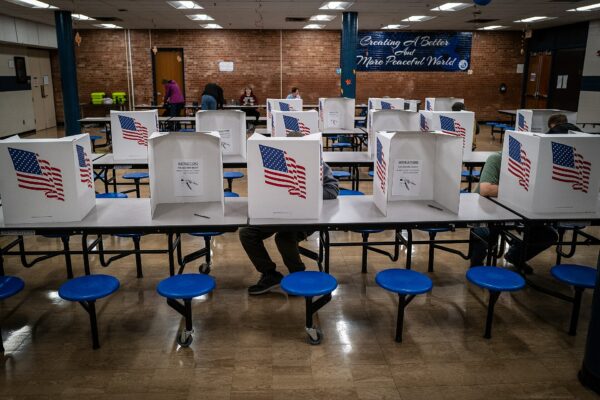
Among the proposed changes is a shift away from certain electronic voting systems that utilize QR codes and barcodes. The administration is reportedly encouraging states to move toward hand-marked paper ballots, an issue officials have discussed frequently over the past year.
The proposal also calls for states to conduct election audits using methods developed by the administration and the Department of Homeland Security. According to Cohen, the plan would place the federal government in a leading role when it comes to determining how those audits are carried out.
In addition, states would be required to use a government-approved verification system to confirm the citizenship status of election workers serving at polling locations.
Perhaps the most debated provision involves voter registration records. Under the reported requirements, states would need to run their voter rolls through the Department of Homeland Security’s SAVE system, a citizenship verification tool designed to identify non-citizens or otherwise ineligible voters.
Supporters of stronger election safeguards have long argued that voter rolls should be maintained accurately and that citizenship verification measures can strengthen public confidence in elections. Critics, however, have raised concerns about expanding federal authority over election administration, a responsibility traditionally handled largely by states.
Cohen noted that this is not the first time the administration has attempted to connect federal grant funding to broader policy objectives.
According to the report, previous efforts to attach policy conditions to federal grants have faced legal challenges from states. In several instances, courts have blocked or limited those initiatives after lawsuits were filed.
The latest proposal is likely to renew debate over the balance between election security, state authority, and federal influence, while potentially setting up another round of legal battles over the limits of executive power and control of federal funding.