

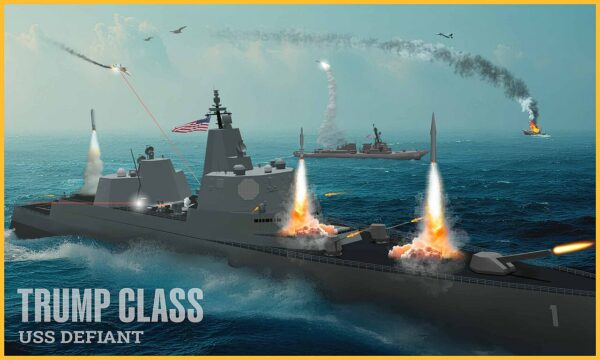
The U.S. Navy is now reportedly setting its sights on a sweeping and historic expansion, unveiling plans to construct 15 Trump-class battleships over the next three decades—an effort that could become one of the most expensive naval undertakings in modern history. The proposal, outlined in the Navy’s 2026 shipbuilding plan, signals a renewed emphasis on raw maritime power at a time when global tensions and competition on the high seas continue to grow.
According to the plan, these new battleships will be nuclear-powered, offering extended endurance and higher speeds compared to conventional vessels. Navy officials emphasized that the Trump-class ships are not intended to replace the current Arleigh Burke-class guided-missile destroyers but instead to complement the fleet with a more formidable and specialized capability.
Rear Adm. Ben Reynolds indicated earlier this year that the Navy expects to invest $43.5 billion into future battleship development over the next five years. That figure alone underscores the scale of the project, with estimates suggesting each vessel could cost as much as $14.5 billion. If accurate, that would place the Trump-class ships above even the price of the U.S.S. Gerald Ford aircraft carrier, long considered one of the most expensive military assets ever built.
The Navy’s own description of the program highlights its focus on maximizing combat power. The battleships are designed to deliver high-volume, long-range offensive firepower while also serving as durable forward command and control platforms. In short, they are built for dominance in high-intensity conflict scenarios, reflecting a doctrine that prioritizes strength and survivability at the upper end of naval warfare.
The initiative traces back to December 2025, when President Donald Trump first announced the program. The lead ship, the U.S.S. Defiant (BBG 1), is expected to enter service in 2036 as part of what the administration has dubbed the “Golden Fleet” initiative.
Backing this vision is a dramatic increase in defense spending. The proposed 2027 defense budget includes a $1.5 trillion boost, representing a 40% to 44% increase overall. Of that, $68.5 billion is earmarked specifically for strengthening the nation’s shipbuilding industrial base. Officials argue that such investments are necessary to address an ongoing shipbuilding shortfall and to narrow the gap with China, which currently leads the world in ship production.
Still, even with these ambitious plans, the Navy acknowledges it may struggle to meet its own benchmarks. By 2031, the fleet is projected to reach 299 warships—well below the stated requirement of 355 ships under the new strategy. That gap raises questions about whether even massive spending increases can fully resolve the challenges facing America’s naval readiness.
While the Trump-class program represents a bold push for military strength, it also reflects the broader reality of modern defense planning: immense costs, long timelines, and an enduring reliance on preparing for conflicts that, ideally, never come.