
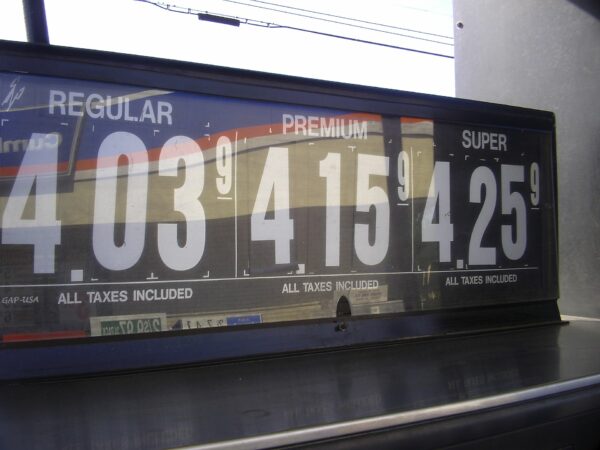
Americans are facing a squeeze on their wallets just before the midterm elections. Mortgage rates are close to 7%, gas prices are near their highest levels since 2022, and the Federal Reserve raised interest rates for the first time in three years.
Everything from buying a house to filling up the tank now costs more than it did even a week ago, putting affordability back in the spotlight ahead of elections that will determine control of Congress. “If you’re the average American household, you’re probably wondering, ‘What did I do to deserve this?'” said Joe Brusuelas, chief economist at RSM.
The economy has bright spots. President Trump’s tax cuts, reduced regulations and historic AI spending have helped boost growth and investment. Unemployment is a low 4.1%, and household net worth hit $186 trillion in the second quarter, a gain of $26 trillion from the fourth quarter of 2024. A stronger-than-expected August retail sales report showed consumer spending remains strong. But tariffs and the data-center build-out have added to inflation, and the war with Iran has set off an energy shock that is raising prices for gasoline, diesel and heating oil.
Consumer prices rose 3.4% from a year earlier in August. For five months, wage gains haven’t kept pace with inflation, and the sharp jump in gas prices means they likely won’t this month either. The yield on 10-year Treasurys crossed 5% this week for the first time since 2023. Futures markets show about a 50% chance of another Fed hike at its October meeting, a week before Election Day.
Fed Chairman Kevin Warsh defended Wednesday’s hike by pointing to the resilience of the U.S. economy amid geopolitical shocks and uncertainty. He argued that taming inflation will most help the least well-off, but costs rise first. David Winston, a veteran Republican strategist and adviser to GOP congressional leadership, said wages haven’t risen enough for voters to feel better positioned to handle current prices. “And that’s the central question,” he said, as voters decide whether Trump and his party have delivered on their economic promises.
For Stacy Hislop, a 64-year-old retiree in Michigan, the pressure is real. Her Social Security payments of about $1,900 a month aren’t enough, she said, and she withdrew $2,000 from savings this year, leaving roughly $13,000. “We’re getting to the point where my solutions are starting to disappear,” she said. She canceled a road trip to Tennessee because of gas prices and sells used items on eBay for extra cash. She plans to vote for Democratic Senate candidate Abdul El-Sayed.
The average rate on a 30-year mortgage climbed to 6.95% over the past week, Freddie Mac reported Thursday, a level not seen since right before Trump took office in 2025. In early 2022, rates were just over 3%.
Trump campaigned in 2024 largely against price pressures and has pushed the Fed to cut rates. After Wednesday’s hike, he wrote, “LOWER THE INTEREST RATES FOR THE UNITED STATES OF AMERICA, AND FAST!” He later told reporters he supports Warsh but said the chairman has “a very tough board.”
The “misery index,” which adds the inflation and unemployment rates, stands at 7.5, up from 6.7 in October 2024. Consumer prices are now 27% higher than in January 2021. Diesel hit a record $6.40 a gallon Thursday, compared with $3.71 a year earlier, and Northeast residents are bracing for a costly heating oil season.