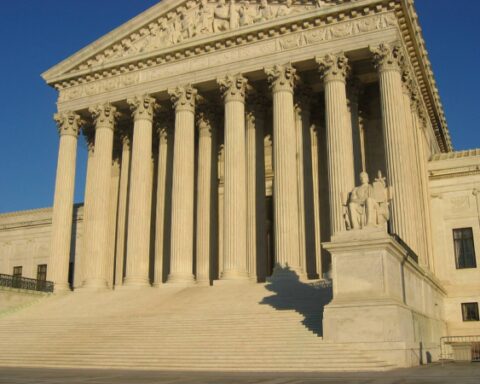

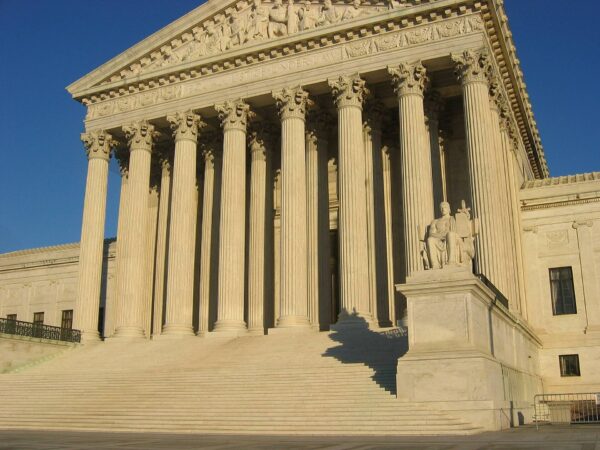
The Supreme Court on Monday turned away a challenge from a former Pennsylvania judge who was suspended over partisan Facebook posts, a case that raised questions about free speech and judicial ethics.
Pennsylvania’s judicial discipline board suspended then-Judge Mark Cohen in 2024 over dozens of posts praising Democrats, including former President Biden and Pennsylvania Gov. Josh Shapiro, a Democrat. The posts also included Cohen’s advocacy for policies such as raising the minimum wage.
Court filings show Cohen also lost his pensions.
Before taking the bench, Cohen spent more than four decades in the Pennsylvania legislature and ran for his judgeship as a Democrat.
Cohen has characterized the Facebook posts as a continuation of his practice of sharing his views on matters of public concern. He argues the lower courts relied on an overly lenient First Amendment standard when they upheld his suspension.
His attorneys made the case in their petition that the high court needed to weigh in.
“This Court’s guidance is sorely needed,” Cohen’s attorneys wrote. “If allowed to stand, the Cohen decision will have a chilling effect on judicial speech, invite political interference in the judicial branch, undermine the rule of law, and have the perverse effect of impugning the integrity of the judiciary.”
In ruling against Cohen, the Pennsylvania Supreme Court applied a balancing test that is typically used when a government employee claims an employer disciplined them in violation of their free speech rights.
Cohen pushed back on that approach, arguing judges are public officials who speak to their constituents rather than ordinary employees.
His lawyers at the firm DLA Piper urged the justices to take up the case.
“This Court should grant the petition because it cleanly presents a question of importance concerning fundamental First Amendment protections for members of the judiciary,” they wrote.
Pennsylvania’s Judicial Conduct Board, which was represented by Stanford Law School’s Supreme Court Litigation Clinic, took a far different view of the posts.
The board described Cohen’s Facebook activity as “partisan cheerleading” and argued there is no precedent establishing that judges have a First Amendment right to engage in that kind of conduct.
In court filings, the board said the case did not merit the Supreme Court’s attention.
“There is no reason for this Court to review that straightforward application of familiar rules that judges around the country have followed for decades,” the board wrote.
The justices’ decision not to hear the case leaves in place the lower court rulings that upheld Cohen’s suspension.
The dispute centered on where the line falls between a judge’s right to free expression and the ethical rules meant to keep the judiciary out of partisan politics.
Cohen and his legal team argued that the rulings against him threatened judicial speech and risked inviting political interference in the courts. The Judicial Conduct Board countered that the rules applied to Cohen are well established and have long been followed by judges nationwide.
With the high court declining to intervene, the board’s position prevails, and the former judge’s effort to overturn his discipline comes to an end at the nation’s highest court.