

Georgia Gov. Brian Kemp on Wednesday announced a special legislative session, signaling that the battle over congressional maps is far from settled as the state looks ahead to the 2028 election cycle.
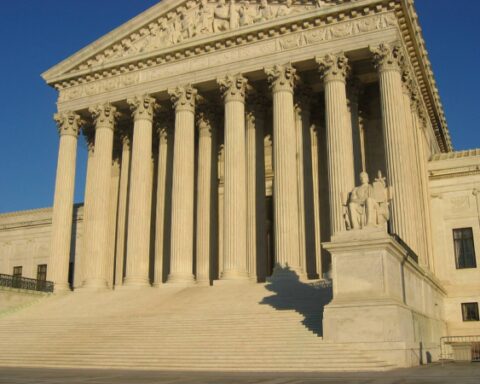
In a formal proclamation, Kemp directed lawmakers to return to Atlanta on June 17 to begin the process of redrawing district lines. The move follows a recent Supreme Court ruling on Louisiana’s congressional map, a decision that is already sending ripple effects across multiple Southern states.
The high court, which holds a conservative majority, found Louisiana’s map to be an unconstitutional racial gerrymander. At the same time, the ruling weakened key provisions of the Voting Rights Act, a longstanding federal law designed to prevent discrimination in voting based on race or minority status.
Kemp framed the decision as a turning point. Speaking to The Atlanta Journal-Constitution earlier this month, he argued the ruling restores what he described as fairness to the redistricting process, saying it allows states to draw maps that reflect voters’ will rather than judicial mandates. Still, he acknowledged the timeline leaves little room for immediate changes, noting it is too late to implement new maps before Georgia’s May 19 primary. Instead, he said the state must have new districts in place before the 2028 elections.
The timing introduces another layer of political complexity. Any redistricting plan approved in the coming years would need to pass under a Republican governor, as Kemp is set to leave office in January. That reality places added pressure on GOP lawmakers to craft maps that can withstand both legal scrutiny and political transition.
Attention is already turning to Georgia’s 2nd Congressional District, represented by longtime Democratic Rep. Sanford Bishop. The district is widely expected to be a focal point in any redraw effort. At the same time, Georgia is not alone. Republican-led legislatures in Texas, Missouri, and North Carolina have already moved forward with their own redistricting efforts, even before the Supreme Court’s latest ruling.
Elsewhere in the South, Mississippi Gov. Tate Reeves recently canceled a planned special session that would have addressed judicial district maps. Reeves said the Supreme Court’s decision removed the immediate need for lawmakers to convene, though he indicated that broader political strategy remains a priority. He pointed specifically to efforts aimed at unseating Democratic Rep. Bennie Thompson, the state’s sole Democratic member in Congress.
Democrats, meanwhile, are sounding the alarm. Congressional Black Caucus Chair Yvette Clarke warned that Republican-led redistricting initiatives across multiple states could significantly reduce Black representation in Congress. She described the potential impact as devastating, pointing to estimates that as many as 19 Black lawmakers could be affected.
Georgia Sen. Raphael Warnock and Rep. Thompson echoed those concerns, arguing the court’s decision could weaken protections for minority voters. Warnock likened the ruling to “Jim Crow in new clothes,” while Thompson cautioned that without federal safeguards, minority representation could face serious setbacks.
As both parties dig in, the redistricting debate is shaping up to be another high-stakes political fight—one that underscores how decisions made in courtrooms and statehouses can carry lasting consequences for representation. And while the process is often framed in terms of legal doctrine and political strategy, it also reflects a broader tension: how to balance state authority with federal oversight in a system where the lines on a map can determine the direction of power for years to come.
[READ MORE: Navy Charts Ambitious Course with Trump-Class Battleships Amid Rising Costs and Strategic Questions]