
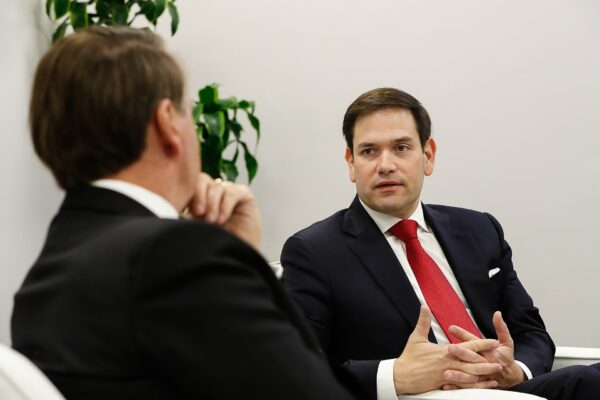
Tensions over U.S. policy toward Iran spilled into a pointed exchange Monday as George Stephanopoulos challenged Secretary of State Marco Rubio to clarify who exactly the administration considers “reasonable” partners inside the country—especially after top officials sharply condemned Iran’s leadership.
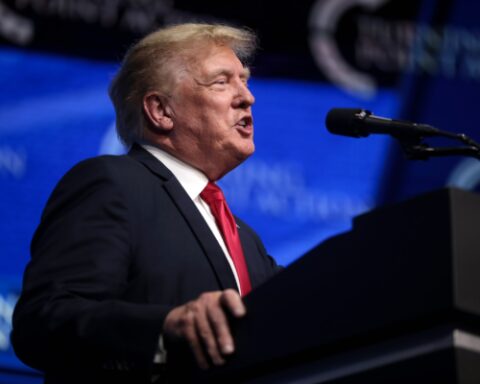
The exchange followed remarks from President Donald Trump, who told reporters aboard Air Force One that Iran had effectively undergone “regime change” after joint U.S.-Israeli strikes killed top leaders. Trump also asserted that current figures in Iran were “agreeing” to a 15-point peace plan, even as officials in Tehran dismissed the idea of talks as “unrealistic” and “unreasonable.”
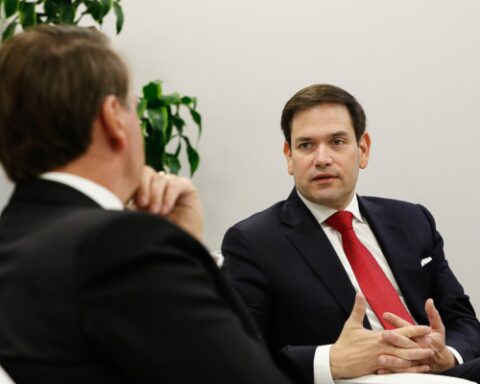
Appearing on ABC’s Good Morning America, Rubio did not soften his criticism of Iran’s leadership. In stark terms, he described those in power as “lunatics” and “insane,” arguing they could not be allowed to obtain nuclear weapons due to what he characterized as an “apocalyptic vision of the future.” He added that neighboring countries understood the threat and had supported ongoing U.S. efforts.
But Stephanopoulos quickly zeroed in on an apparent contradiction. If Iran’s leaders are as dangerous as described, he asked, who exactly are the “new and more reasonable” figures Trump claimed the U.S. was engaging with?
Rubio declined to identify specific individuals, citing concerns that doing so could put them at risk inside Iran. Instead, he suggested that internal divisions may be emerging within the country, opening the possibility—though not the certainty—of change.
“There are some fractures going on there internally,” Rubio said, adding that if individuals are now willing to take Iran in a different direction, that would be a positive development. He emphasized that the Iranian people themselves are not the problem, calling them “incredible,” while placing blame squarely on what he described as a clerical regime.
Still, the secretary acknowledged the uncertainty surrounding these potential contacts. While some individuals may be signaling openness in private discussions, he cautioned that it remains unclear whether they hold real power or can follow through on their commitments.
Pressed again by Stephanopoulos on whether the U.S. is, in fact, in direct discussions with such figures, Rubio offered a careful answer. He indicated that there are people communicating with the U.S. in ways not seen in the past, but stressed that private conversations often differ from public statements.
At the heart of Rubio’s message was a familiar but uneasy balance: a stated preference for diplomacy alongside a recognition that it may not succeed. “We’re going to test it,” he said, underscoring that while negotiation is the preferred path, the administration is preparing for the possibility that talks could fail.
That dual-track approach reflects the broader reality facing policymakers. On one hand, there is hope that internal shifts in Iran could open the door to de-escalation. On the other, there is a clear acknowledgment that decades of entrenched leadership—and resistance to peace—may limit those prospects.
As the administration weighs its next steps, the exchange highlighted a deeper tension: even as officials speak of diplomacy, the backdrop remains one of military action and uncertainty. And while leaders in Washington point to potential openings, the question of whether those openings can translate into lasting peace—or merely prolong a dangerous standoff—remains unresolved.
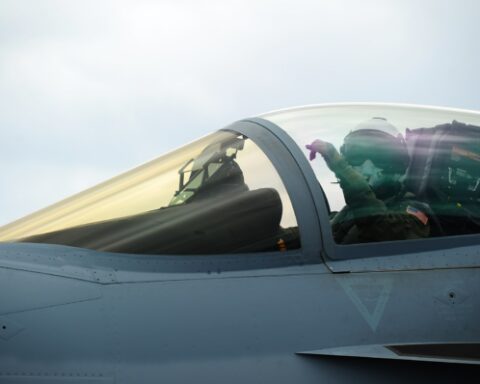
[READ MORE: Iranian Strike Hits U.S. Air Base, Damages Critical Aircraft and Raises Strategic Concerns]