
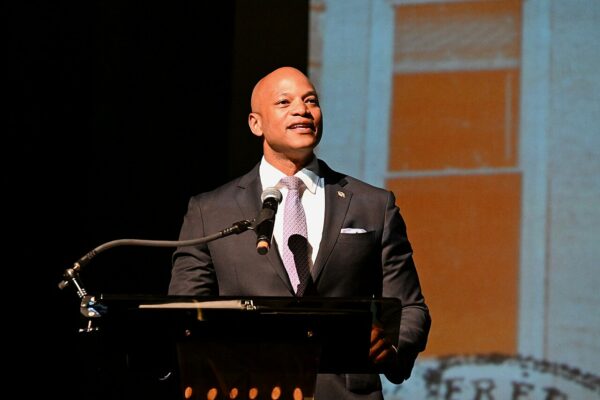
A fierce legal battle over gun rights erupted Tuesday after Democratic Maryland Gov. Wes Moore signed legislation that could ban the sale of Glock pistols and other firearms labeled by supporters of the measure as “machine gun convertible pistols.”
Within hours of the bill becoming law, major pro-Second Amendment organizations announced plans to challenge the measure in federal court, arguing the legislation unfairly targets law-abiding Americans instead of criminals who illegally modify firearms.
Moore’s move makes Maryland the second state in the nation to enact such a ban, following California Gov. Gavin Newsom, who signed similar legislation in October 2025. Connecticut lawmakers are also reportedly considering comparable restrictions.
The National Rifle Association quickly blasted the Maryland law as unconstitutional and vowed an aggressive legal response.
“With a single stroke of his pen, Governor Wes Moore has banned one of the most popular handguns in America,” NRA-ILA Executive Director John Commerford said in a release Tuesday.
“Instead of going after criminals and enforcing existing laws, he has chosen to disarm law-abiding Marylanders and strip them of their constitutional rights,” Commerford continued. “The NRA is filing an immediate legal challenge to this unconstitutional assault on the Second Amendment and will exhaust every option available to ensure this law is struck down.”
Neither Moore nor Democratic Maryland Attorney General Anthony Brown immediately responded to requests for comment regarding the lawsuit.
The Second Amendment Foundation also announced it would join the legal fight alongside the Firearms Policy Coalition.
“These pistols are among the most popular on the market, chosen in overwhelming numbers by peaceable citizens for lawful purposes like self-defense,” SAF Executive Director Adam Kraut said in a statement.
Kraut argued Maryland lawmakers were attempting to outlaw firearms commonly owned by Americans because some criminals illegally modify them using conversion devices that are already prohibited under federal law.
“Not only is this law as foolish as banning hops and barley to prevent drunk driving, but these commonly owned arms are clearly protected by the Second Amendment,” Kraut added.
Under current federal law, manufacturing or possessing an unregistered fully automatic firearm is already illegal under the National Firearms Act. Critics of the Maryland law say that existing statutes already prohibit illegal conversion devices and that banning commonly owned handguns punishes lawful owners rather than violent offenders.
The lawsuit filed in the United States District Court for the District of Maryland argues Glock pistols and similar firearms function no differently than standard semiautomatic handguns, even if criminals illegally alter some of them.
“Glock and Glock-style pistols are not relevantly different from any ordinary semiautomatic handgun,” the complaint states. “What is more, these pistols are in common use; indeed, they are among the most popular firearms in the nation.”
The debate carries political weight because Glock pistols have become deeply embedded in both civilian and law enforcement use across America. The firearms regularly appear among the country’s best-selling handguns, and Glock’s 19X model reportedly sold more than 100,000 units within six months of release, according to a 2018 company press release.
Federal agencies, including the Federal Bureau of Investigation, have also issued Glock pistols to agents for decades. Former Vice President Kamala Harris has publicly stated on multiple occasions that she owns a Glock for personal protection.
As the legal fight now heads to court, the clash highlights the broader national divide over gun policy — one where lawmakers increasingly push sweeping restrictions while critics argue that expanding regulations often targets ordinary citizens more than hardened criminals.
[READ MORE: Trump Administration Pushes Sweeping NDA Policy To Crack Down On Federal Leaks]