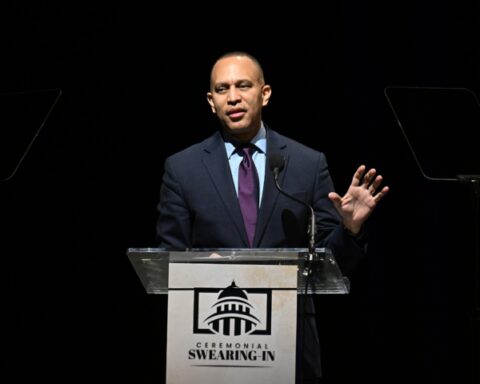

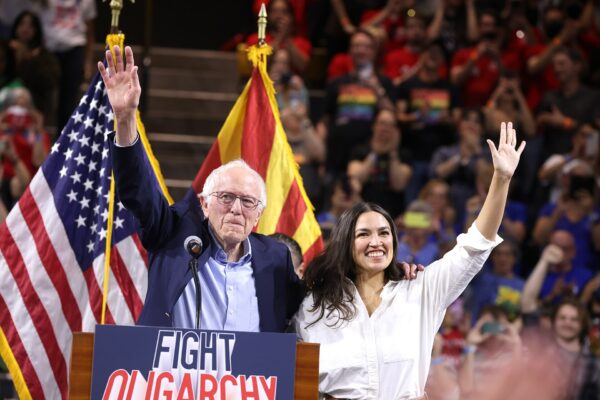
Sen. Bernie Sanders, I-Vt., is backing House Minority Leader Hakeem Jeffries’ proposal to dramatically expand Medicare. It is the clearest sign yet that the incoming Democratic majorities plan to make government-run health care a top priority next year.
Jeffries is the heavy favorite to become speaker of the House on Jan. 3. His plan stops short of the full single-payer system Sanders has spent years pushing. But it meets the immediate demands of Sanders and other progressives: lowering the Medicare eligibility age from 65 to 55, adding dental, vision and hearing coverage, and guaranteeing health coverage for children.
“If we can do it — and I think we can — this will substantially impact the lives of tens and tens of millions of people,” Sanders said.
Jeffries has said Democrats should use their “historic” House majority and “robust” Senate majority to push the agenda through. “We should lower the age of Medicare eligibility. We should expand coverage to include vision, hearing” and dental benefits, he said.
Jeffries also said Democrats must first undo Republican cuts to Medicaid and restore the Affordable Care Act’s enhanced premium tax credits, which were first expanded during the COVID-19 pandemic. He has pledged to get to work “right out of the gate.”
Sanders, meanwhile, has made clear he wants to go much further. In an interview with The Associated Press, he unveiled a plan to put Medicare for All at the top of the Democratic agenda when he is expected to take over as chairman of the Senate Health, Education, Labor and Pensions Committee in January.
Sanders’ plan would phase in a universal, government-run system over four years. The first year would include the same steps Jeffries supports. Sanders said universal health care is “no longer a utopian vision” and pointed to Democrats’ sweeping midterm victories.
“Transforming a system which is 18% of the GDP of America, you don’t do that overnight,” Sanders said of the transition.
Price is the big question. The national deficit stands at $2 trillion, or 6.2% of gross domestic product, and lowering the Medicare eligibility age is expected to spark a major fight between the parties. Researchers at George Mason University previously estimated that an earlier version of Sanders’ Medicare for All plan would cost $32 trillion over a decade.
Sanders’ past proposals to pay for the program would shift health care financing away from private insurance premiums and toward payroll contributions.
Not all Democrats are on board with the full Sanders vision. Jeffries and Senate Democratic Leader Chuck Schumer have not sponsored Medicare for All legislation. Jeffries’ plan appears designed to give progressives a win while avoiding a full government takeover of health insurance.
Critics have long warned that a massive Medicare expansion would strain a program already facing serious financial pressure. Opponents argue that expanding eligibility before shoring up the program’s finances could put the benefits current seniors depend on at risk.