
President Donald Trump offered a striking new characterization of U.S. policy toward Iran on Saturday, suggesting that while key elements of the country’s military capabilities have been devastated, American actions have deliberately stopped short of dismantling Iran’s armed forces entirely.
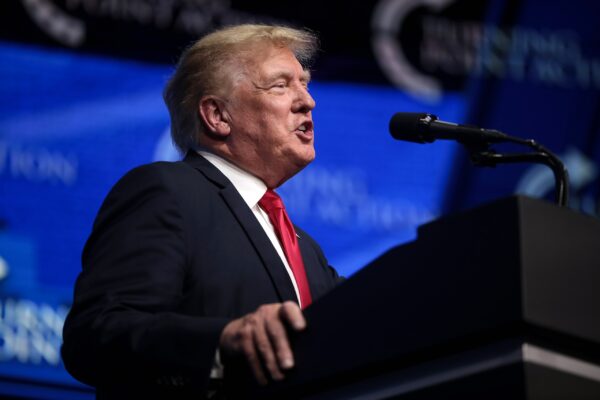
Speaking during an appearance on My View on Fox News, hosted by Lara Trump, the president argued that the United States has exercised restraint in its approach to Iran’s military establishment, distinguishing between what he described as more moderate military elements and other factions within the regime.
“Their Navy is totally gone, 100 percent,” Trump said. “Their Air Force is totally gone, 100 percent. Their military, we’ve sort of left it alone — because we think that their military is somewhat moderate.”
The remarks represented a notable shift in emphasis from some of Trump’s earlier statements, in which he appeared to portray Iran’s military as having been comprehensively destroyed. In an April 11 post on Truth Social, the president declared that the United States had “completely destroyed Iran’s Military, including their entire Navy and Air Force, and everything else.” He also asserted that Iran’s leadership had been eliminated and predicted major changes in regional shipping through the Strait of Hormuz.
A day later, speaking with reporters after arriving in Maryland aboard Air Force One, Trump again described Iran’s military as shattered. “Their military is destroyed,” he said. “Their whole Navy is underwater.”
The apparent discrepancy has prompted questions about how the administration assesses the current state of Iran’s military apparatus. Yet Trump’s latest comments suggest that the distinction may lie between targeting specific capabilities and leadership structures while preserving broader military institutions that could play a role in maintaining order inside the country.
The president argued that previous military interventions have demonstrated the risks of completely dismantling a nation’s security infrastructure.
“People would be surprised to hear that,” Trump said. “Because mistakes have been made in wars where you wipe out everybody and then you have a country that for 40 years can never rebuild.”
That argument reflects a longstanding critique among many conservatives of postwar nation-building efforts and regime-change campaigns that left power vacuums in countries such as Iraq and Libya. Rather than pursuing total institutional collapse, Trump appeared to suggest that preserving some military structures can help avoid prolonged instability.
The comments come at a delicate moment in negotiations over a potential agreement with Iran. According to Axios, the administration is seeking revisions to a proposed deal crafted by Trump’s negotiating team. An unnamed senior administration official told the outlet that the president wants stronger provisions governing both the transfer of Iran’s enriched uranium and the timetable under which such measures would be carried out.
Those demands indicate that while diplomatic efforts remain active, the White House is continuing to pursue a hard-line negotiating posture. Trump has frequently argued that maximum pressure, backed by credible military force, produces stronger outcomes at the bargaining table than concessions offered in advance.
Whether the president’s latest remarks signal a broader strategic recalibration or simply a clarification of previous comments remains unclear. What is evident is that the administration continues to balance two objectives: maintaining intense pressure on Tehran while avoiding the kind of prolonged regional instability that has complicated past American interventions in the Middle East.
[READ MORE: Trump Backs Pamela Evette, Delivering a Blow to Nancy Mace in South Carolina Governor’s Race]