
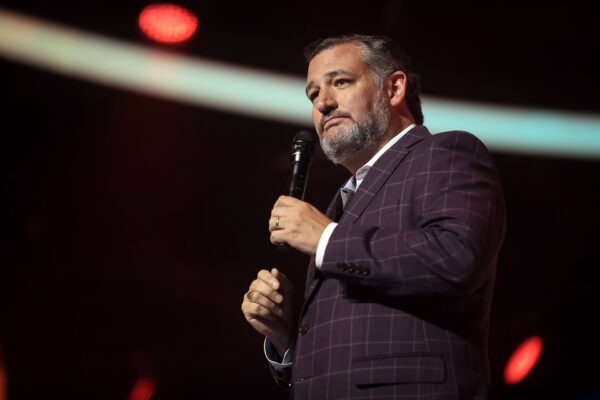
A growing rift within Texas’ Republican ranks spilled into public view this week, as Rep. Dan Crenshaw leveled sharp criticism at Sen. Ted Cruz, accusing his fellow Republican of aligning with a donor linked to what has been described as an “illegal alien safe haven.”
The dispute comes on the heels of Cruz’s endorsement of state Rep. Steve Toth, who ultimately emerged victorious in a contentious Republican primary challenge against Crenshaw. The endorsement appeared to intensify already simmering tensions, as outside money and intra-party divisions played a significant role in shaping the race.
According to a report from Axios, Toth’s campaign received a substantial boost from a wave of anti-Crenshaw advertisements funded by Texas banker Robert Marling, who reportedly contributed nearly $700,000. The scale of that financial backing raised eyebrows and added fuel to concerns about the influence of major donors in Republican primaries—particularly in races where ideological differences are often overshadowed by strategic alliances.
Crenshaw did not hold back in his response. In an early-morning Instagram post, he shared an image of Cruz aboard a plane, referencing criticism of lawmakers traveling during a Homeland Security shutdown. From there, Crenshaw launched into a broader critique, accusing Cruz of failing to adequately support border enforcement agencies like ICE and CBP while benefiting from the support of wealthy backers.
He also revisited a past controversy, invoking Cruz’s widely criticized trip to Cancun during a severe winter crisis in Texas. Crenshaw contrasted that episode with the struggles of ordinary Texans, suggesting a disconnect between political leadership and the realities faced by constituents. His remarks painted Cruz as part of an “ultra wealthy” class, one that, in Crenshaw’s view, has managed to maintain political support despite such controversies.
At the center of Crenshaw’s allegations is Marling’s connection to Colony Ridge, a development that has drawn scrutiny from Texas officials. In a February 2026 announcement, Texas Attorney General Ken Paxton revealed that the state had reached a $68 million settlement with the developer. In that same release, Paxton accused Colony Ridge of effectively operating as “a de facto illegal immigrant community,” a characterization that has intensified debate over border enforcement and local development practices.
Crenshaw’s argument hinges on what he describes as a troubling alignment: a prominent donor supporting a candidate backed by Cruz, while also being tied to a development criticized for its alleged role in facilitating illegal immigration. His message was clear—“follow the money”—as he sought to connect political endorsements with broader policy concerns on immigration.
The clash highlights a deeper struggle within the Republican Party, where disagreements over strategy, donor influence, and border policy are increasingly playing out in public. While both Crenshaw and Cruz position themselves as strong voices on immigration enforcement, their dispute underscores how political rivalries—and the financial networks behind them—can complicate that message.
At a time when border security remains a central issue for many voters, the episode serves as a reminder that internal divisions can be just as consequential as external challenges. And as rhetoric sharpens, the broader question remains whether such infighting ultimately strengthens or weakens the party’s ability to address the issues it claims to prioritize.
[READ MORE: Ingraham Raises Tough Questions as Trump’s Iran Strategy Faces Critical Test]