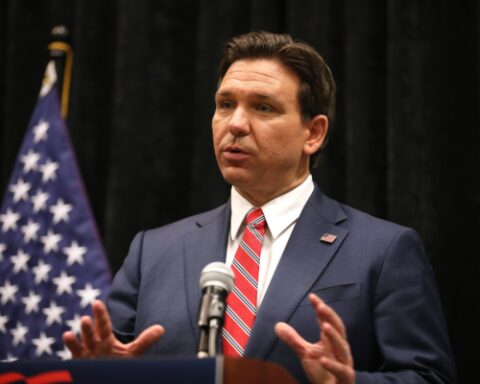

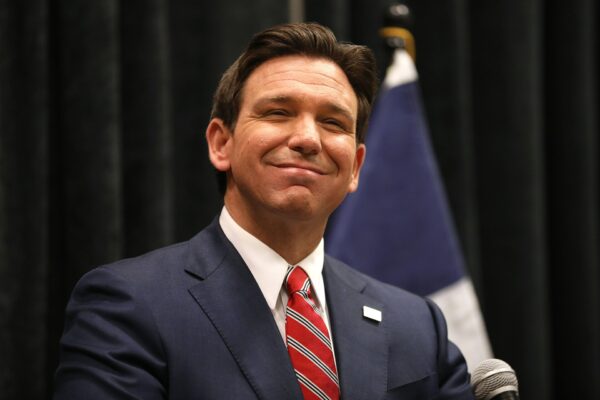
Florida Gov. Ron DeSantis is reportedly staking out a position that could shape his political future: skepticism toward the rapid expansion of artificial intelligence and the massive data centers powering it.
As AI development accelerates — fueled in part by taxpayer dollars — DeSantis is appealing to a growing number of Americans who worry the technology could cost jobs, drive up energy prices, and strain local communities. His stance sharply contrasts with President Donald Trump and two Republicans widely viewed as top contenders for Trump’s 2028 endorsement: Vice President JD Vance and Secretary of State Marco Rubio.
“We don’t want to see them building a massive data center and then sending you the bill,” DeSantis said this month. “Data centers take up the power equivalent of a half a million-person city. We feel very, very strongly about protecting the consumer.”
According to eight sources familiar with DeSantis’ thinking, his AI skepticism reflects both genuine policy concerns and a calculated political strategy as he eyes life after his term-limited governorship. With Vance and Rubio occupying what one longtime adviser described as the “pro-AI lane,” DeSantis faces the challenge of carving out distinct territory.
“It’s kind of a no-brainer, right?” the adviser said. “You’ve got JD Vance and Marco Rubio, the top two contenders for 2028 big time in the pro-AI lane. The infrastructure is lining up behind JD and to some extent Marco. So, DeSantis’ challenge is to stay relevant.”
Taryn Fenske, a DeSantis aide, said the governor’s skepticism is rooted in concerns about AI’s societal impact.
“The governor is an AI skeptic because chatbots are convincing children to commit suicide,” she said.
Florida itself is emerging as a potential battleground in the AI debate. NBC News reported that Leading the Future, a pro-AI super PAC, is spending $5 million on television ads supporting Rep. Byron Donalds’ gubernatorial campaign. Donalds is the only state-level candidate the group has backed, signaling that AI companies may see Florida as a prime target for expansion.
Polling suggests the issue could resonate nationally. A recent Economist/YouGov survey found 63% of Americans — including 60% of Trump voters in 2024 — believe AI advancements will reduce available jobs. A plurality, 33%, said AI would have a more negative than positive effect on the U.S. economy. A November Morning Consult poll found 41% of registered voters favor banning data centers near their homes.
Tensions have already surfaced between DeSantis and the Trump administration. Trump’s AI czar, David Sacks, and other allies have lobbied against DeSantis’ push for Florida to adopt state-level AI regulations. While proposed legislation remains technically alive, its passage appears increasingly unlikely as the legislative session winds down.
“There are some people … who almost relish in the fact that they think this just displaces human beings,” DeSantis said at an AI roundtable. “Count me out on that.”
Trump, during his State of the Union address, announced that major tech companies would be required to cover more of the energy costs associated with new data centers. “They can build their own power plants as part of their factory,” Trump said, adding that electricity prices could fall in some communities.
Vance, who has Silicon Valley venture capital experience, has championed pro-growth AI policies while warning against excessive regulation. He has also expressed concern about AI being used for surveillance or political bias and has suggested Congress should set national standards rather than leaving regulation to individual states.
For DeSantis, advisers say the political opportunity lies with voters who feel left behind by AI’s rapid growth.
“Look at all these many trillions of dollars being spent on AI and data centers. They have no clue how it will ever benefit them,” one official close to his administration said. “For DeSantis, it’s a populist play. And that’s perfect for him.”
As debate intensifies over jobs, energy costs, and America’s competition with China, the fight over AI could become a defining issue in the early maneuvering for 2028.