
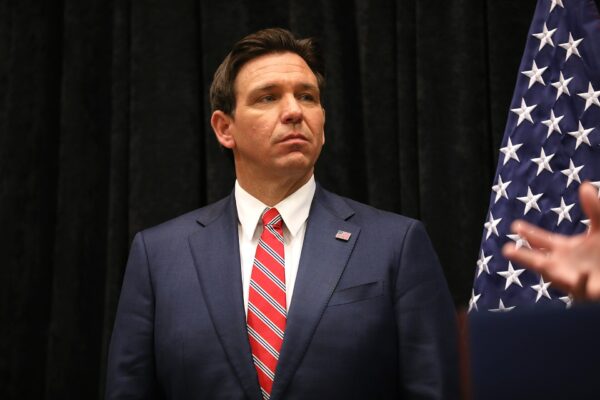
The Council on American-Islamic Relations reportedly filed a federal lawsuit late Monday against Florida Gov. Ron DeSantis, seeking to overturn an executive order he signed last week that designates the group as a “terrorist organization” and cuts it off from state and local government contracts, funding, and employment.
CAIR, which describes itself as the nation’s largest Muslim advocacy organization, accused DeSantis of violating the Constitution and framed the lawsuit as a defense of First Amendment rights.
The complaint argues that the governor’s order amounts to unlawful retaliation against the group based on its political views and advocacy.
“This is still America, where due process, free speech and other rights guaranteed by the Constitution matter,” said CAIR Litigation Director Lena Masri in a statement accompanying the lawsuit. Masri said the group intends to protect the rights of Americans “liberal and conservative, religious and secular” to engage in activism without what she described as illegal government retaliation.
DeSantis issued the executive order on December 8 and publicly defended it in a post on X. In that post, the governor said CAIR was “founded by persons connected to the Muslim Brotherhood” and asserted that individuals associated with the organization had been convicted of “conspiring to provide” support to designated terrorist organizations.
The order bars CAIR from receiving state or local government contracts, funding, or employment opportunities in Florida.
When asked to comment on the lawsuit, a spokesperson for DeSantis pointed reporters back to the governor’s public remarks on social media.
In one post, DeSantis said members of the Florida Legislature were working on legislation aimed at stopping what he described as the “creep of Sharia law.” He added that he hoped lawmakers would codify protections for Floridians against CAIR and the Muslim Brotherhood into state law.
CAIR’s lawsuit sharply disputes the basis for the executive order. The plaintiffs argue that the order identifies no criminal charges or convictions against CAIR itself, relies on no federal terrorist designation, and improperly invokes statutory authority.
According to the complaint, the order is grounded in political rhetoric rather than established legal findings and imposes broad penalties on what CAIR calls a domestic civil rights organization because of its viewpoints and public advocacy.
The lawsuit asks a federal court to block enforcement of the order and restore CAIR’s eligibility to interact with state and local government entities in Florida.
The legal fight in Florida follows similar developments in Texas. In November, Texas Gov. Greg Abbott became the first governor in the country to classify CAIR as a foreign terrorist organization. CAIR responded by filing suit against Abbott and Texas Attorney General Ken Paxton just days after that designation was announced.
The back-to-back legal challenges highlight a growing clash between Republican governors and CAIR, as some state leaders move to take aggressive action against organizations they say are tied to extremist ideologies, while CAIR argues those actions violate constitutional protections.
As the Florida case moves forward in federal court, it is likely to draw national attention, raising broader questions about executive authority, free speech, and how states define and respond to perceived threats from advocacy groups operating within the United States.
[READ MORE: Kennedy Center Board Unanimously Votes to Rename Venue Trump-Kennedy Center]