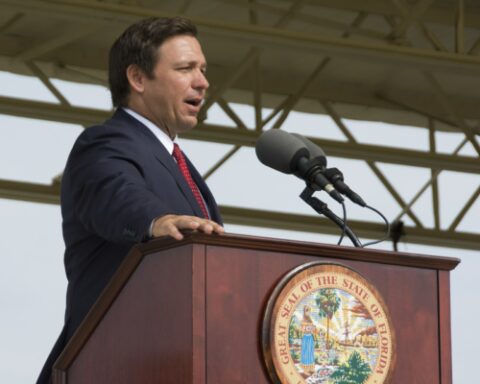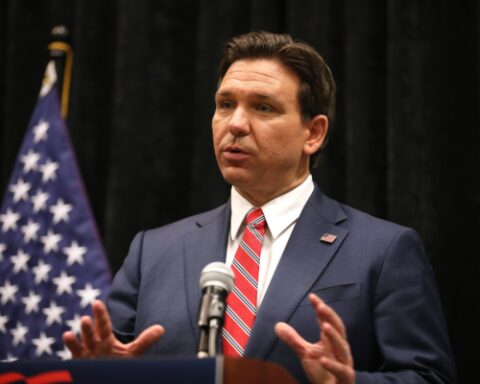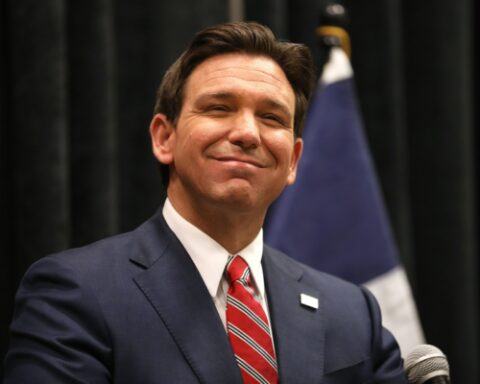

Florida Republican Party Chairman Evan Power is projected to come up short in his bid for Congress, finishing fourth in a crowded GOP primary for the state’s 2nd Congressional District, according to Decision Desk HQ.
Power competed in an eight-candidate Republican field for the seat being vacated by retiring Rep. Neal Dunn, R-Fla. Austin Rogers secured the Republican nomination in the race to succeed Dunn.
The projected defeat comes despite Power’s prominent position within Florida Republican politics and his years of experience with the state party.
Power has served as chairman of the Republican Party of Florida since 2024. Before taking the top job, he spent roughly a year as the party’s vice chairman. His involvement with the Florida GOP dates back to 2017, when he began serving as assistant treasurer.
Power’s political career began even earlier as a legislative analyst for the Florida House. During that period, he worked for then-state Rep. Marco Rubio, R-Fla., who is now secretary of State, according to Power’s biography on the Florida GOP website.
Power’s tenure leading the state Republican Party has coincided with a significant expansion of the GOP’s voter registration advantage over Democrats.
Republicans held a voter registration advantage of roughly 1.1 million over Democrats in Florida in 2024. That advantage had grown to approximately 1.5 million by the end of July, according to figures from the Florida Division of Elections.
However, the widening Republican advantage has not been driven by an increase in the total number of registered Republicans.
Florida’s Republican registration has actually fallen by approximately 28,000 since 2024. At the same time, the state’s overall number of registered voters has declined by more than 750,000.
The Republican Party’s increased registration advantage has instead been driven largely by a steep decline in Democratic registrations. The number of registered Democrats in Florida has dropped by more than 400,000 during that period.
Power entered the Republican primary for Florida’s 2nd Congressional District in January and put significant personal money behind his campaign.
According to Federal Election Commission records, Power loaned his congressional campaign $150,000.
His candidacy also drew criticism from fellow Republican primary candidate Keith Gross, who questioned Power over fundraising while simultaneously serving as chairman of the state GOP.
Despite his full-time position with the Florida Republican Party and his personal loan to the campaign, Power entered the closing stretch of the primary at a financial disadvantage compared with both Rogers and Gross.
Power reported to the FEC that his campaign had less than $263,000 in cash on hand as of the end of July.
Rogers ultimately emerged from the eight-man Republican field with the nomination, while Gross also fell short in his bid for the seat.
Power, meanwhile, was projected to finish fourth, ending the Florida GOP chairman’s attempt to move from state party leadership to Congress.