
A senior Iranian national security official has outlined an extensive list of demands that he says the United States must satisfy before Iran will allow the Strait of Hormuz to reopen to maritime traffic, casting fresh uncertainty over one of the world’s most critical shipping routes.
Mohammad Bagher Zolghadr, secretary of Iran’s Supreme National Security Council, released a statement through Iranian state media on Saturday declaring that the reopening of the strategic waterway depends on Washington meeting several conditions. Among them, he called on the United States to lift its naval blockade and sanctions against Iran, withdraw American military forces from around the country, pay war reparations, release frozen Iranian assets, halt attacks on Iran’s regional allies, and end what he described as threats against the Islamic Republic.
The White House did not immediately comment on the demands. The previous cease-fire agreement reached between the United States and Iran in June stated that sanctions would only be fully lifted as part of a final agreement addressing Iran’s nuclear program. U.S. officials have also maintained that access to frozen Iranian funds would require Tehran to first give up its stockpile of highly enriched uranium.
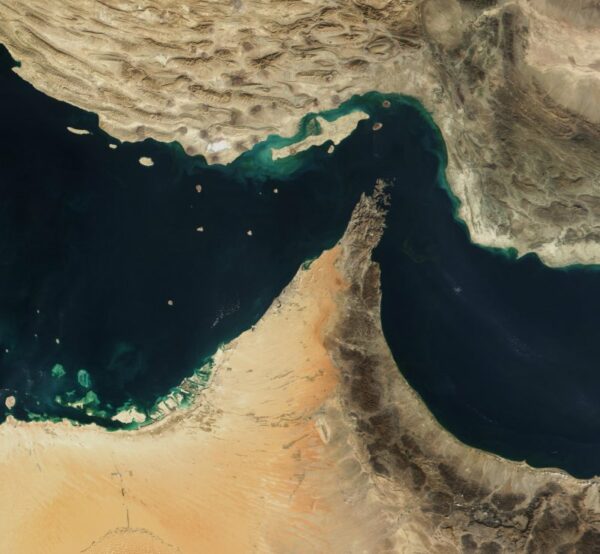
The latest statement comes as Iran and Oman continue negotiations over the future management of the Strait of Hormuz, the narrow waterway separating the two countries. Iran effectively shut down the strait after U.S. and Israeli attacks in February, disrupting one of the world’s busiest maritime trade corridors.
Zolghadr’s announcement appeared to undermine expectations that an agreement with Oman could soon restore normal shipping through the strait and help ease global energy prices. The demands also introduce additional uncertainty as discussions continue over how commercial traffic might safely resume.
Iranian officials had already indicated earlier Saturday that reopening the strait was not imminent. Hossein Mohebbi, a spokesman for Iran’s Islamic Revolutionary Guards Corps, said the reopening would not be determined solely by negotiations with Oman. Instead, he said it would depend on the United States fully accepting Iran’s conditions, while also insisting Washington refrain from interfering in Tehran’s negotiations with Oman or other countries.
Iranian Foreign Minister Abbas Araghchi struck a somewhat more optimistic tone, saying Iran and Oman were “very close” to reaching an agreement. However, he emphasized that reopening the Strait of Hormuz would still require additional conditions to be met, including U.S. compensation for what Iran describes as violations of the Islamabad Memorandum, the June cease-fire agreement between the two nations.
That memorandum, brokered in Islamabad by Pakistani mediators, called for reopening the strait and temporarily easing oil sanctions on Iran. However, the agreement contained language that both governments interpreted differently. The United States supported an alternative southern shipping route that stayed near Oman’s coastline and avoided Iranian waters, while Iran objected to that approach and warned vessels using the route before launching attacks against some ships. The cease-fire eventually collapsed, and the United States reinstated its naval blockade of Iranian ports.
Araghchi argued that previous U.S. efforts to establish alternate shipping lanes undermined Iran’s authority over the waterway and said any future violations of the memorandum or Iran’s management of the Strait of Hormuz would be unacceptable. He added that Iranian and Omani military officials are discussing a temporary shipping route through the strait while broader negotiations continue.
Analysts suggested the latest statements may also reflect domestic political pressures within Iran, where Araghchi and President Masoud Pezeshkian have faced criticism from hard-line factions opposed to negotiations with the United States.
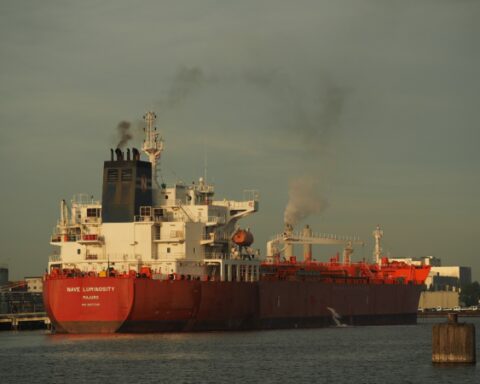
Meanwhile, tensions in the region remain elevated. The Emirati Foreign Ministry said Saturday that an Iranian attack targeted a tanker belonging to the Abu Dhabi National Oil Company while transiting the Strait of Hormuz. The company reported that at least 15 of its vessels have been attacked since the conflict began, resulting in one death and 20 crew injuries.
Oman condemned the repeated attacks on commercial shipping, calling them violations of international law while maintaining that negotiations with Iran remain constructive. The Omani government urged all sides to avoid actions that could jeopardize progress in the ongoing talks.
Speaking with Fox News on Saturday, Vice President JD Vance described discussions surrounding the strait as being “in the middle of the game.” He said current efforts are focused on establishing a safe traffic system for commercial vessels, including demining operations and obtaining assurances from Iran that it will not attack commercial shipping. Vance did not discuss what concessions the United States might consider but argued that Washington maintains significant leverage over Tehran.
According to maritime data company Kpler, just over a dozen ships per day have passed through the Strait of Hormuz during the past week, a sharp decline from the average of roughly 130 daily crossings before the conflict. Some vessels have also switched off their tracking transponders while navigating the region, making precise traffic counts more difficult.