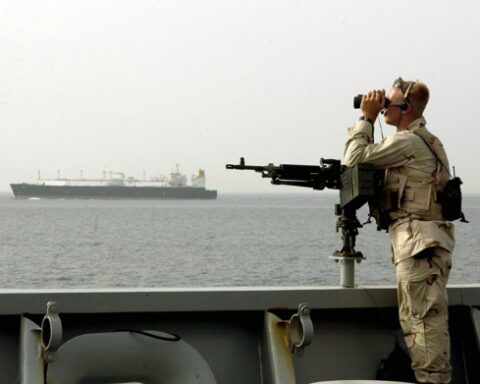

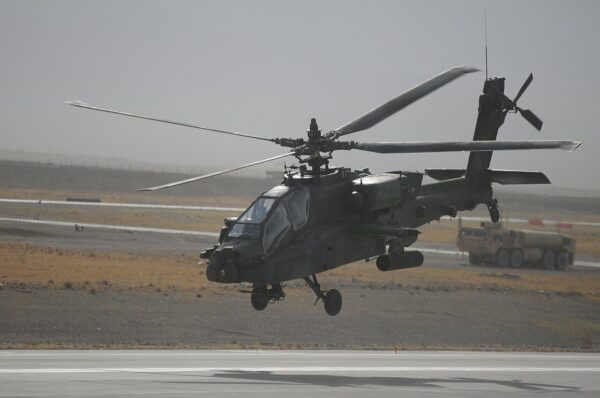
A U.S. Army Apache helicopter crashed over the strategically vital Strait of Hormuz early Tuesday, underscoring the dangers that continue to surround military operations in the region even as President Donald Trump expressed optimism that a peace agreement with Iran could be within reach.
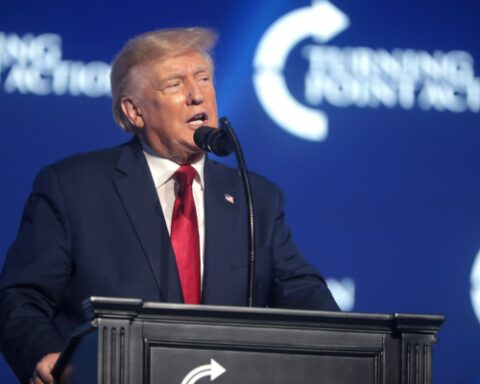
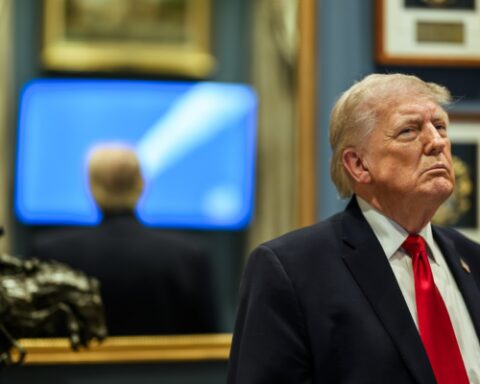
Speaking with reporters at New York’s JFK Airport, Trump confirmed that the aircraft had gone down but emphasized that the crew survived the incident.
“The pilots are fine. Yeah. Nobody injured,” Trump said. “We are going to issue a report tomorrow, but the pilots are fine.”
According to a statement from U.S. Central Command (CENTCOM), the AH-64 Apache crashed at approximately 3:30 a.m. local time off the coast of Oman while conducting a patrol mission. The two-person crew was rescued within two hours and was reported to be in stable condition.
Questions remain about what caused the crash. Officials have not yet determined whether the helicopter was brought down by hostile action or suffered a mechanical failure. The incident occurred amid continued tensions in the region following a new round of missile exchanges between Iran and Israel, the most intense fighting seen since a cease-fire took effect on April 8.
The Apache helicopter has played a significant role in American military operations in the area. The aircraft has been used as part of efforts to enforce a blockade on Iranian crude oil shipments and tankers, a pressure campaign designed to push Tehran toward a broader agreement. The helicopters have also been utilized by the United Arab Emirates to intercept Iranian drones during the ongoing conflict.
Despite the latest setback, Trump projected confidence that diplomatic efforts are making progress and suggested that a broader resolution to the conflict may be close at hand.
“We’re very close to having a very, very good, strong, powerful deal,” Trump told reporters.
The president contrasted the prospect of a negotiated settlement with the consequences of a prolonged military campaign.
“If we go and bomb, which we can do very easily if we want, and we spend another two or three weeks bombing, they’ll have nothing left whatsoever,” Trump said.
At the same time, he pointed to the heavy costs that could accompany additional fighting.
“But you won’t have the strait open for months,” he added. “If we do the bombing, a lot of people are going to be killed. Who wants to do that? I don’t.”
Earlier, during a tele-town hall for South Carolina Republican candidates, Trump predicted that the United States would soon be able to claim what he described as a “total victory.”
“You’re really going to win it over the next two weeks when we declare total victory,” Trump said. “It will be a total victory and it will happen very soon.”
Negotiations remain focused on Iran’s stockpile of highly enriched uranium. The United States wants Tehran to surrender the material, which is believed to remain inside the country following American airstrikes during the 12-day war in 2025. Iran, meanwhile, is demanding sanctions relief and the release of frozen assets before a final agreement is completed, conditions Trump has rejected.
The latest tensions followed Iranian missile launches toward Israeli territory late Sunday. Iran described the strikes as retaliation for Israeli attacks against Hezbollah targets near Beirut. Israel subsequently struck Iranian air defense systems and a petrochemical facility it said was connected to ballistic missile production. Iran’s Islamic Revolutionary Guard Corps later announced a retaliatory strike against what it described as a similar facility in Haifa.
As the exchanges intensified, Trump publicly urged both sides to stop the fighting.
Iran’s joint military command later announced a halt to offensive operations against Israel while warning that any further attacks by Israel or its allies would trigger a much harsher response.
Trump nevertheless maintained that diplomacy is gaining ground.
“They were going back and forth [with strikes], and now they both agreed, through me, to stop,” Trump said, adding that any future agreement would prevent Iran from obtaining nuclear weapons and would reopen the Strait of Hormuz immediately upon signing.