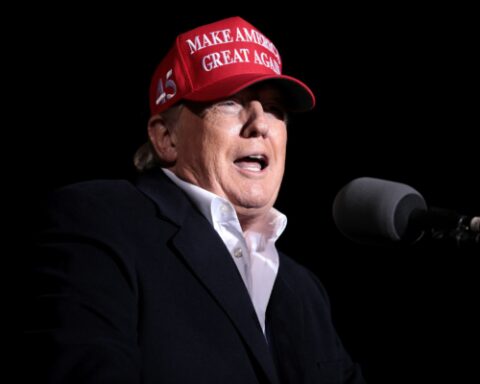

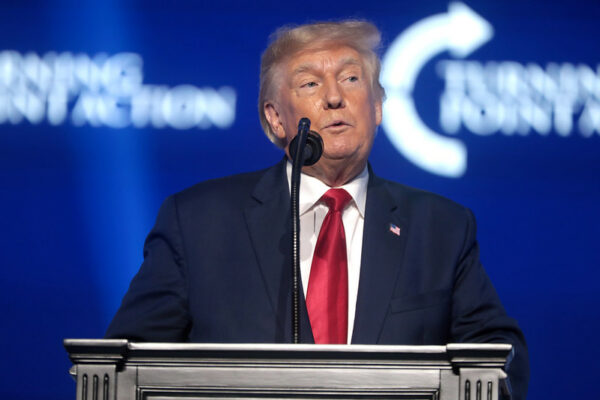
President Donald Trump addressed the nation from the White House for the first time since the start of the U.S. offensive in Iran, offering a message of confidence while facing growing questions at home and abroad about the trajectory of a conflict now entering its fifth week.
“We’re going to finish it very fast. We’re getting very close,” Trump said, projecting certainty that the end of the fighting is near.
But financial markets appeared less assured. Futures tied to major U.S. stock indexes dropped by more than 1 percent, while oil prices surged roughly 7 percent overnight—signs that investors remain wary of prolonged instability. The economic ripple effects are already being felt, with rising energy costs pushing the national average price of gas above $4 per gallon for the first time since 2022.
The president again urged European nations to take responsibility for reopening the Strait of Hormuz, a critical global shipping route. Trump argued the passage would “open naturally” once the conflict concludes, though no clear mechanism or timeline was offered.
At the same time, Trump escalated his rhetoric toward Tehran, warning that the United States could strike Iran’s electricity infrastructure if a deal is not reached in the coming weeks. Such threats have raised concerns, as targeting civilian infrastructure could violate international law and risk broader consequences.
Notably, the address left several key questions unanswered. Trump did not clarify whether U.S. ground troops could be deployed, nor did he outline specific conditions for a ceasefire. For many observers, that lack of detail stood out as much as the president’s confident tone.
Market analysts echoed that concern. Jon Withaar of Pictet Asset Management said the absence of a clear timeline or strategy left investors uncertain, particularly with the possibility of continued military action over the next several weeks. The suggestion that boots on the ground had not been ruled out—and that infrastructure strikes remain under consideration—has only added to the unease.
Earlier in the day, Trump claimed that Iran had requested a ceasefire, stating he would consider such a move once the Strait of Hormuz is “open, free, and clear.” However, Iranian officials swiftly rejected that assertion. Foreign Ministry spokesperson Esmail Baghaei called the claim “false and baseless.”
Iranian Foreign Minister Abbas Araghchi acknowledged that communication between Tehran and Washington has occurred, confirming he received messages from U.S. special envoy Steve Witkoff. Still, he emphasized that “the trust level is at zero,” underscoring the fragile state of diplomacy.
Meanwhile, the broader conflict continues to intensify. Israel reported intercepting missiles launched from Iran, while Gulf nations including the United Arab Emirates and Saudi Arabia said they responded to additional missile and drone attacks.
At home, Trump is facing mounting political pressure. His approval ratings have declined, including among segments of his own base, as concerns grow over the economic toll and the prospect of a drawn-out war. Rising fuel costs and market volatility have only sharpened that anxiety.
Despite these challenges, Trump painted an optimistic picture of what lies ahead. He predicted that once the conflict ends, energy supplies will stabilize, gas prices will fall, and stock markets will rebound quickly.
Still, the president sought to draw a sharp distinction between the current conflict and past U.S. military engagements, insisting it will not resemble long-running wars like Vietnam or Afghanistan. Whether that assurance holds may depend less on rhetoric and more on the uncertain realities still unfolding on the ground.