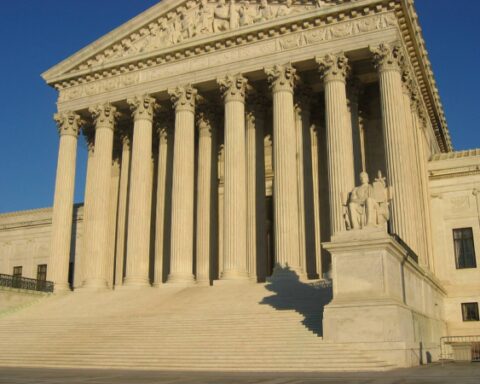

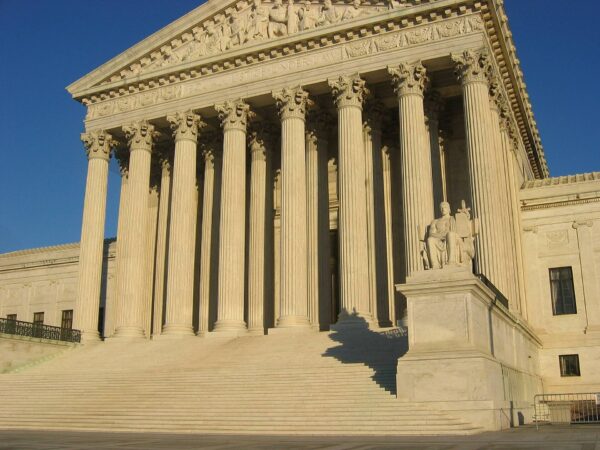
The Supreme Court on Friday agreed to take up one of the most consequential immigration cases of President Trump’s new term, announcing it will review whether the president’s restrictions on birthright citizenship are constitutional.
The decision to hear the case sets up a high-stakes battle over the meaning of the 14th Amendment and the authority of a president to secure the nation’s borders and citizenship laws.
On his first day back in office, President Trump signed an executive order ending automatic U.S. citizenship for children born on American soil unless at least one parent holds permanent legal status.
The order represents one of the most aggressive attempts in modern history to curb abuse of America’s birthright citizenship system—a system Trump and his supporters argue has been exploited for decades. Nearly a year later, however, the policy has been stalled by lower federal courts, all of which have ruled that the order conflicts with the 14th Amendment.
Despite these rulings, the Supreme Court signaled Friday that it is prepared to revisit the longstanding interpretation of the Citizenship Clause. In an unsigned order, the justices agreed to review one of the challenges launched by the American Civil Liberties Union and other progressive legal groups.
The Court plans to hear arguments this term and issue a decision by summer, marking a pivotal moment in the broader debate over immigration and constitutional authority.
The Trump administration urged the Court to intervene after multiple judges blocked the executive order nationwide. Solicitor General D. John Sauer argued that the lower courts’ rulings undermined border security and conferred citizenship on individuals who were never entitled to it.
“The lower court’s decisions invalidated a policy of prime importance to the President and his Administration in a manner that undermines our border security,” Sauer wrote, adding that the decisions “confer, without lawful justification, the privilege of American citizenship on hundreds of thousands of unqualified people.”
The case centers on the Citizenship Clause of the 14th Amendment, which declares that all persons born on U.S. soil and “subject to the jurisdiction thereof” are American citizens. Federal courts have historically acknowledged only narrow exceptions—such as children of foreign diplomats and certain Native American tribes. Trump’s order challenges the modern assumption that the clause automatically applies to children of foreign nationals with no legal status in the country.
The Court will also address whether Trump’s order conforms with a federal statute that codifies existing interpretations of the clause.
This is not the first time the justices have stepped into the dispute. Last term, the Supreme Court intervened after lower courts issued nationwide injunctions against Trump’s policy, ruling 6–3 to narrow the scope of such injunctions. While that decision temporarily benefited the administration, it did not resolve the order’s legality and prompted further litigation.
One such case involved a federal judge in New Hampshire who, on July 10, certified a provisional class of all babies who could be affected by the order and blocked enforcement against them. The lawsuit is backed by the ACLU, the NAACP Legal Defense Fund, Democracy Defenders Fund, and the Asian Law Caucus. These groups have urged the Supreme Court to reject review, claiming the question was “already answered 127 years ago.”
With the Supreme Court now set to decide the matter, the nation is heading toward a defining ruling on citizenship, constitutional interpretation, and presidential authority—one that could reshape U.S. immigration law for a generation.
[READ MORE: Top Democrat Says Navy Admiral Denies Report That Hegseth Issued “Kill Them All” Order in Drug-Boat Strike]