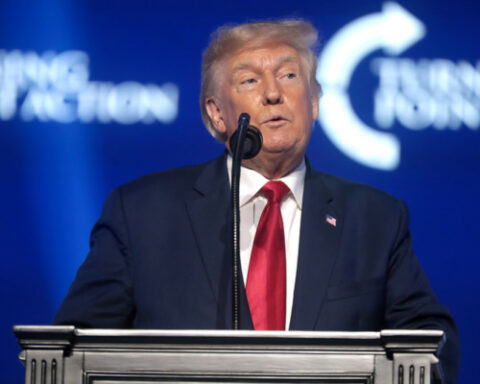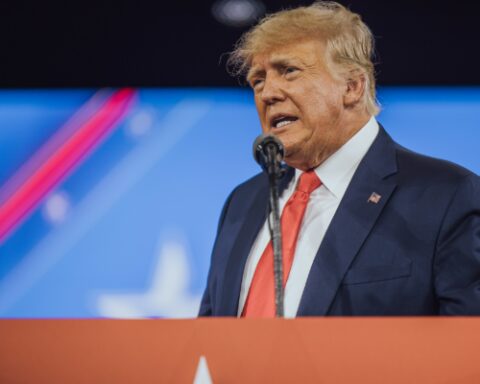

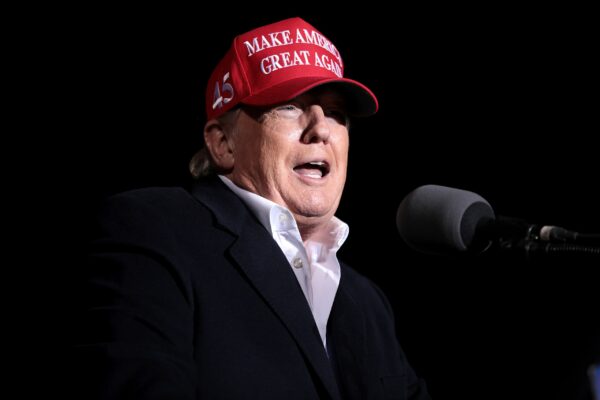
President Donald Trump brought a contentious interview with NBC’s Meet the Press to an abrupt end Sunday after a heated back-and-forth with moderator Kristen Welker over a range of issues, including his proposed “anti-weaponization” fund, the January 6 Capitol riot, and his ongoing claims regarding election integrity.
The tense exchange unfolded during the final six minutes of the interview, with Welker repeatedly pressing the president on topics where she challenged his assertions and sought clarification on administration policy.
The confrontation began when Welker asked Trump about the future of the $1.8 billion “anti-weaponization” fund, an initiative he continues to praise even after his administration stepped away from efforts to establish it.
“Just to be very clear, are you backing off the fund completely as your acting Attorney General Todd Blanche has said, or are you looking for another avenue to revive the fund?” Welker asked.
Trump responded with a lengthy defense of the proposal, arguing that many Americans had suffered as a result of what he described as government weaponization during the Biden administration.
According to Trump, individuals targeted by government actions experienced severe personal and financial consequences, including job losses, family disruptions, and other hardships. He argued that such people deserved compensation.
Welker repeatedly attempted to determine whether Trump intended to pursue another path to revive the fund.
Trump ultimately said he personally believed the fund was a worthwhile idea and indicated he would support its approval if lawmakers moved forward with it, while acknowledging he would be disappointed if it failed to materialize.
The discussion soon shifted to January 6 and whether individuals who assaulted police officers during the Capitol riot should receive taxpayer-funded compensation through any future program.
Trump said he would not be inclined to support such payments but added that he would need to review individual circumstances.
The conversation quickly grew more heated when Trump revisited longstanding claims regarding law enforcement conduct and the events of January 6. Welker repeatedly challenged those assertions, stating that there was no evidence supporting some of the claims being made.
Trump pushed back, insisting there was substantial evidence and encouraging viewers to review available footage from that day.
As the exchange intensified, Trump broadened his criticism beyond January 6, arguing that many Americans had suffered unjustly due to what he viewed as politically motivated actions by government officials and media organizations.
Welker again challenged those claims, stating that the evidence Trump referenced had not been established through court proceedings.
The interview then moved to election integrity, another topic that has remained central to Trump’s political messaging. Trump argued that elections had been mishandled and specifically pointed to delayed vote counting in California following a recent election.
Welker repeatedly asked whether he could provide evidence to support allegations of wrongdoing. Trump responded that the circumstances themselves were sufficient cause for concern, while Welker maintained that such observations did not constitute proof.
The exchange eventually devolved into a direct confrontation over media credibility.
Trump accused major news organizations, including NBC and several competing networks, of biased and dishonest coverage. Welker rejected accusations that she was personally corrupt and attempted to redirect the discussion back to policy matters.
Instead, the argument escalated further.
After several minutes of interruptions and accusations from both sides, Trump declared that he had “had enough” and announced he was ending the interview.
As Welker noted that her team had traveled to Wisconsin for the interview, Trump defended his decision, saying he had already devoted significant time to the conversation. He concluded by arguing that a nation cannot be great if its press lacks public trust before bringing the interview to a close and walking away.
The contentious ending underscored the deep divide between Trump and many members of the national media, a conflict that has remained a defining feature of American political life. At the same time, the exchange reflected the increasingly bitter tone that often dominates debates over elections, government power, and other major national controversies.
[READ MORE: Top Aide to Texas Congressman Faces Firearm Charges After Capitol Security Incident]