
President Donald Trump on Friday expressed cautious optimism that negotiations with Iran over its nuclear program will succeed, but made clear that Tehran will face serious consequences if diplomacy collapses.
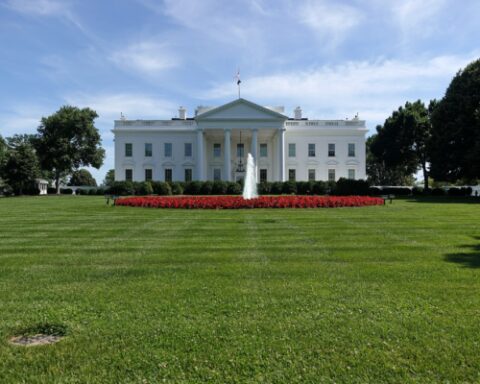
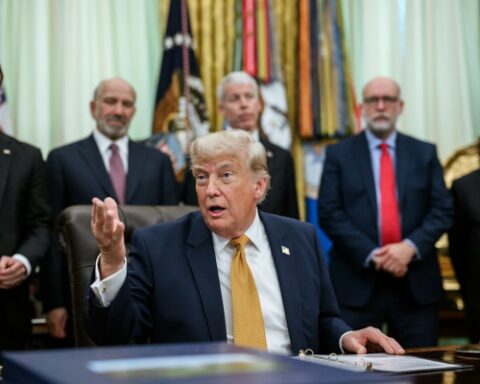
Standing in the White House ahead of a trip to Fort Bragg to honor U.S. military members involved in the operation that captured former Venezuelan leader Nicolás Maduro, Trump told reporters that while talks are ongoing, the option of force remains on the table. “I think they’ll be successful,” he said of the nuclear talks. “And if they’re not, it’s going to be a bad day for Iran, very bad,” signaling that failure could trigger a strong U.S. response.
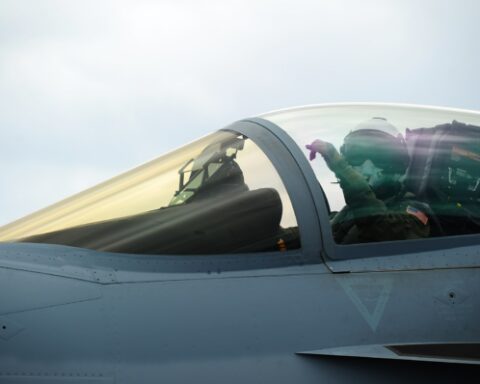
The negotiations come as the United States continues to build up its military presence in the Middle East. Trump confirmed that a second aircraft carrier strike group will soon join the USS Abraham Lincoln already stationed in the region should talks break down. “We have one out there that just arrived. If we need it, we’ll, well, we have it ready,” the president told reporters. “A big, a very big force.”
This deployment is part of a broader strategy to pressure Iran while giving diplomacy every chance to succeed. Trump has repeatedly stressed that he prefers a negotiated resolution but won’t hesitate to use military strength if necessary. In recent weeks, he has weighed sending additional carriers to the Gulf as part of that pressure campaign, emphasizing that Tehran must choose between a credible deal or face tougher actions from the United States.
The president’s comments reflect Trump’s dual-track approach: leverage American strength while keeping the door open for talks. Top Trump officials say Iran has engaged seriously in discussions and that maintaining pressure with overwhelming military assets is intended to push Tehran toward an agreement.
Trump has also issued blunt warnings directly targeting Iran’s leadership, underscoring American resolve not to tolerate threats to U.S. interests or allies. Speaking to NBC News earlier in the week, Trump told Iranian Supreme Leader Ayatollah Ali Khamenei that he should be “very worried” about the consequences if negotiations fail.
Earlier in the week, Trump met with Israeli Prime Minister Benjamin Netanyahu to discuss the ongoing negotiations. Although Trump said “nothing definitive” was reached, he emphasized that his preference was to keep diplomatic talks with Tehran going. Trump later reiterated on social media that continued negotiations were his priority, noting that in the past when Iran chose not to make a deal, it faced significant U.S. actions.
The president referenced past U.S. military pressure as evidence that Tehran understands Washington’s seriousness. In his comments on Truth Social, Trump wrote that after Iran rejected a previous deal, it was hit with a forceful U.S. response — a lesson he said Tehran should take seriously now.
Domestic unrest within Iran and global concerns about its nuclear ambitions have added urgency to the negotiations. But Trump’s message remains firm: the United States is pursuing a deal, yet will not be intimidated or back down if talks falter.
The standoff highlights Trump’s broader strategy of balancing diplomacy with overwhelming strength. As the world watches, the president continues to make clear that America will protect its interests and allies, and that Iran must make the right choice — or face the consequences.