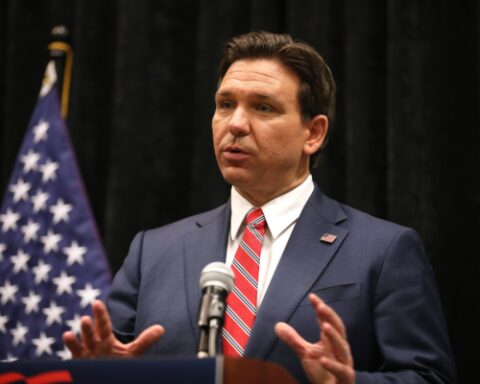


Florida Gov. Ron DeSantis on Friday signed a death warrant for a convicted murderer, continuing the state’s aggressive use of capital punishment after Florida carried out a modern-era record 19 executions in 2025.
The warrant orders the execution of Ronald Heath, 64, who was convicted in the brutal 1989 murder of Michael Sheridan in Alachua County. According to documents posted Friday evening on the Florida Supreme Court’s website, Heath is scheduled to be executed on Feb. 10 at Florida State Prison.
The case dates back more than three decades and involves a crime that prosecutors and judges have described as calculated, violent, and merciless. Heath was sentenced to death for the May 24, 1989 killing of Sheridan, who was shot, stabbed, and robbed in a wooded area south of Gainesville.
Court records show that Ronald Heath and his brother, Kenneth Heath, met Sheridan earlier that night at the Purple Porpoise Lounge in Gainesville. After socializing at the bar, the three men drove together to a remote wooded location, where they planned to smoke marijuana. What followed, according to the court’s findings, was a deliberate attempt to rob Sheridan that quickly escalated into murder.
In a 1991 sentencing order, then–Circuit Judge Robert P. Cates detailed the sequence of events that led to Sheridan’s death. The judge wrote that the Heath brothers attempted to rob Sheridan once they arrived at the wooded area. Ronald Heath, according to the order, instructed his brother to shoot Sheridan. The initial gunshot wounded Sheridan in the chest but did not kill him.
Despite being gravely injured, Sheridan remained alive. Judge Cates wrote that Sheridan sat down and struggled to remove his jewelry and wallet, apparently attempting to comply with the demands being made of him.
“Perceiving that Sheriden’s movements were futile and dilatory, Ronald Heath pulled out a hunting knife and stabbed Sheriden in the neck,” the judge wrote.
The order describes a prolonged and gruesome attack. Ronald Heath attempted to slit Sheridan’s throat but was unable to do so effectively because the knife was dull. Judge Cates wrote that Heath then “sawed” at Sheridan’s neck but still failed to kill him.
After the knife attack proved unsuccessful, Ronald Heath again directed his brother to carry out the killing. Kenneth Heath then fired two bullets into Sheridan’s brain, killing him. The judge concluded that the murder was intentional and carried out to facilitate a robbery.
Florida’s decision to move forward with Heath’s execution comes after the state led the nation in executions last year, a point repeatedly emphasized by DeSantis and other state leaders who argue that swift and certain punishment is necessary to deliver justice to victims and deter violent crime.
Supporters of the death penalty in Florida have pointed to cases like Heath’s as clear examples of why capital punishment remains part of the state’s justice system. The details outlined in the sentencing order highlight a level of brutality that courts have determined warrants the ultimate punishment.
With the death warrant now signed, Heath is set to be executed at Florida State Prison unless a court intervenes. The move reinforces Florida’s hardline approach to violent crime and signals that, under DeSantis, the state intends to continue using the death penalty in the most severe cases.
[READ MORE: State Department Urges Americans to Flee Venezuela as Security Risks Mount After Maduro’s Ouster]