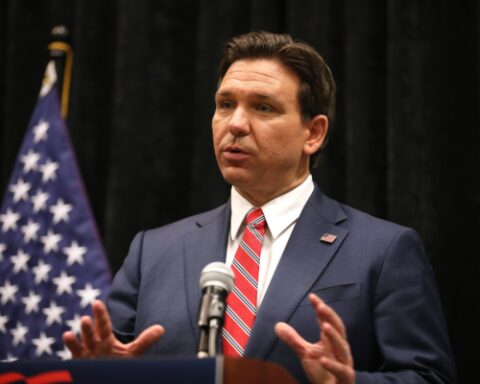

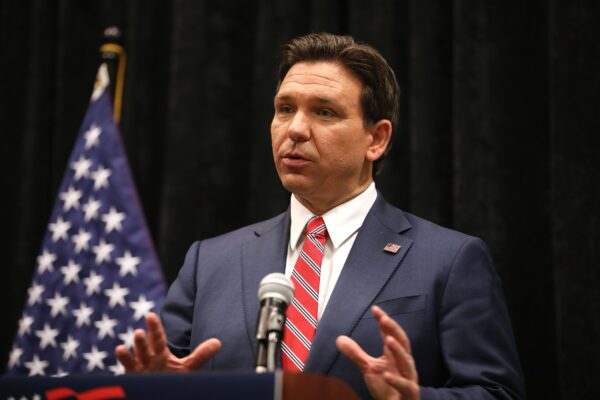
Florida Gov. Ron DeSantis announced Wednesday that he will call a special legislative session in April to revisit Florida’s congressional map, signaling that Republicans are preparing for a major redistricting fight ahead of the November midterm elections.
Speaking during an event focused on rural investments, DeSantis said he will formally convene the Florida Legislature to take up congressional redistricting, citing both population shifts and an upcoming U.S. Supreme Court ruling that could reshape redistricting rules nationwide.
“Today, I am going to issue a proclamation to convene a special session of the Florida Legislature to do redistricting of the congressional map in the state of Florida,” DeSantis said. He explained that the timing of the session is deliberate, noting it will take place later in April.
The governor pointed to a pending Supreme Court decision involving Louisiana’s congressional map and the Voting Rights Act as a key factor. That ruling, DeSantis said, is expected to affect the legal standing of congressional districts across the country, including several in Florida.
“Our population has changed so much in the last four or five years,” DeSantis said. “We need to get apportioned properly and people deserve equal representation.”
Republicans have made no secret of their desire to revisit Florida’s map, which currently gives the GOP a commanding 20–8 advantage in the U.S. House delegation. A redraw could allow Republicans to pick up additional seats, part of a broader national strategy as the party prepares for what could be a challenging midterm environment.
Florida’s move comes amid a nationwide redistricting battle. Republicans have already looked at revising congressional maps in states such as Texas and Missouri to create new pickup opportunities. Democrats, for their part, have responded aggressively, pushing through a new map in California and signaling that Virginia could follow later this year.
DeSantis’s announcement aligns with commitments he made last year to hold a spring redistricting session. Florida Senate Republican leadership has echoed that timeline, while a Florida House redistricting panel has already met several times on the issue in recent weeks. Those early meetings raised questions about when GOP leaders ultimately plan to finalize and pass a new map.
Much of the attention now centers on the Supreme Court’s looming decision in the Louisiana case and its broader implications for the Voting Rights Act. During a rare second round of oral arguments in October, the high court appeared skeptical of the continued use of race as a dominant factor in drawing congressional districts.
If the justices move to limit race-based redistricting, the decision could open the door for multiple southern states to redraw maps and potentially eliminate majority-minority districts in the U.S. House. Observers say such a ruling would dramatically reshape the redistricting landscape.
Florida’s situation, however, is more complex. In 2010, voters approved amendments to the state Constitution that impose stricter anti-gerrymandering standards. Those provisions limit how aggressively lawmakers can draw districts for partisan advantage, adding an extra layer of legal scrutiny to any new map.
Still, DeSantis has argued that population changes alone justify a fresh look at Florida’s congressional lines. With the state continuing to grow rapidly and attract new residents, Republicans say redistricting is necessary to ensure fair representation.
As April approaches, all eyes will be on Tallahassee and the Supreme Court. The combination of a special legislative session, a pivotal high court ruling and high-stakes midterm elections sets the stage for a consequential redistricting showdown that could shape Florida’s political map for years to come.