
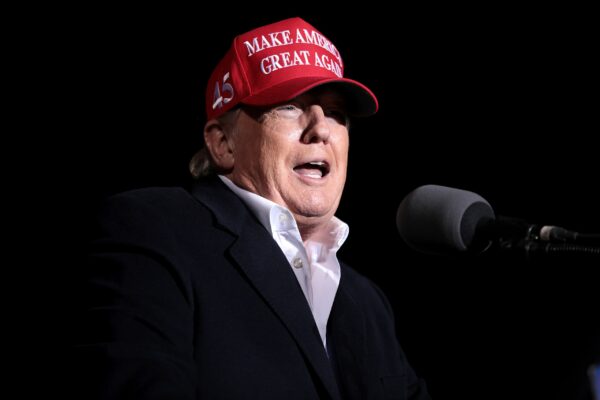
President Donald Trump issued a series of blunt and provocative statements over the weekend, declaring what he called “the death of Iran” while also turning his focus inward, labeling the Democratic Party as America’s “greatest enemy.”
The remarks, delivered in a Truth Social post Sunday, came just hours after the president escalated tensions abroad with a stark warning to Tehran. In his latest message, Trump suggested that Iran’s downfall had already taken place, though the situation on the ground remains tied to an ongoing and costly conflict.
“Now with the death of Iran, the greatest enemy America has is the Radical Left, Highly Incompetent, Democrat Party!” Trump wrote, framing his political opponents as a more pressing threat than foreign adversaries.
The declaration is likely to draw scrutiny, particularly given that the administration is reportedly seeking an additional $200 billion in funding from the Defense Department to sustain the war effort. The juxtaposition of a claimed victory with a request for massive new resources underscores the complexity — and uncertainty — surrounding the current state of the conflict.
Just a day earlier, Trump had issued a direct ultimatum to Iran tied to the Strait of Hormuz, a critical global shipping route that has been at the center of rising tensions. In that post, the president warned that if Iran did not fully reopen the strait within 48 hours, the United States would respond with sweeping strikes on Iranian power plants.
“If Iran doesn’t FULLY OPEN… the United States of America will hit and obliterate their various POWER PLANTS,” Trump wrote, signaling a willingness to escalate military action if demands were not met.
The rapid shift from threats of large-scale strikes to declarations of Iran’s demise highlights the volatile nature of the current standoff. While strong rhetoric has long been a hallmark of Trump’s political style, the stakes are significantly higher when such statements are tied to an active military conflict.
At the same time, the president’s decision to pivot from foreign policy to domestic politics in the same breath reflects a broader strategy of linking external threats with internal divisions. By casting Democrats as the nation’s primary adversary, Trump is reinforcing a message that political battles at home are just as consequential as those abroad.
The weekend posts extended beyond Iran and domestic politics. On Saturday, Trump also reacted to the reported death of former FBI Director and special counsel Robert Mueller with a sharply worded message.
“Good, I’m glad he’s dead,” Trump wrote. “He can no longer hurt innocent people!”
Taken together, the statements paint a picture of a presidency operating at full throttle, with rhetoric that moves quickly between global conflict and domestic political confrontation. For supporters, such blunt language may signal strength and clarity. For critics, it raises questions about tone, consistency, and the broader implications of escalating both political and military tensions simultaneously.
As the situation with Iran continues to unfold — and as funding requests and strategic decisions remain on the table — the contrast between bold declarations and the realities of prolonged conflict may become increasingly difficult to ignore.