
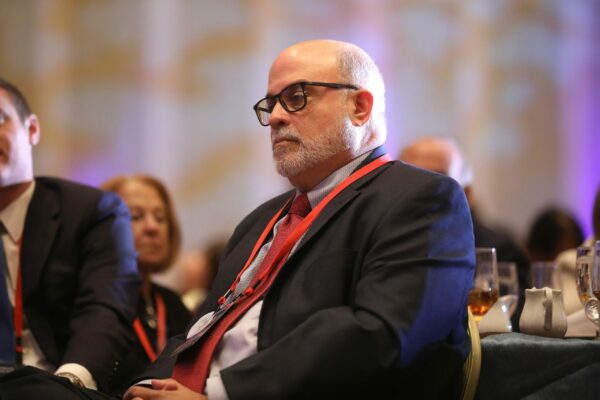
Tensions over U.S. policy toward Iran spilled into public view this week, as Fox News host Mark Levin accused former National Counterterrorism Center Director Joe Kent of leaking details of a private White House meeting—an allegation that comes amid a broader and increasingly heated debate over America’s role in the region.
Kent, who resigned Tuesday in protest of the Trump administration’s ongoing operation on Iran, had argued in his resignation letter that Iran posed “no imminent threat” to the United States. He also claimed the conflict was driven by external pressure, a charge that quickly drew sharp criticism from Levin and others aligned with the administration’s approach.
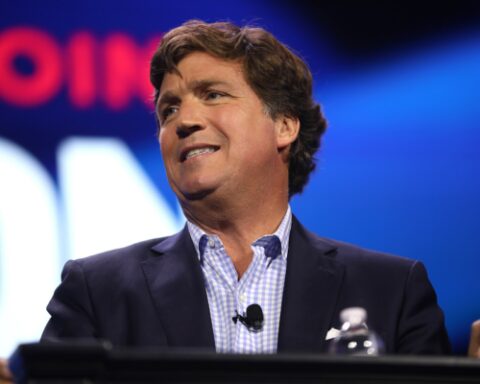
The dispute traces back to a June 4, 2025, post by commentator Tucker Carlson, who claimed Levin had visited the White House to advocate for military action against Iran. Carlson framed the situation in stark terms, arguing that those pushing for confrontation were urging American troops into harm’s way while not bearing the burden themselves. He went further, warning that a war with Iran could have severe consequences, including American casualties and economic disruption tied to rising oil prices.
Carlson also suggested that calls for action were being justified through alarm over nuclear weapons, while the underlying goal was regime change. He argued that past efforts to topple foreign governments have proven counterproductive and warned that escalating rhetoric could obscure the risks of another prolonged conflict. He concluded by urging restraint and expressing hope that President Donald Trump would not follow that path.
Levin, however, pushed back forcefully—not only against Kent’s resignation letter but also against what he described as a breach of trust involving the president. Responding to Kent’s remarks, Levin invoked his family’s military history, saying his grandfather, a Marine who fought at Iwo Jima, would have been outraged by Kent’s statements.
He then made a direct accusation, claiming that Kent had leaked details of a private meeting between Levin and President Trump to Carlson. According to Levin, the meeting took place at the president’s request, and its disclosure represented a serious violation. He suggested there may have been additional leaks, calling the situation “not good,” and criticized what he described as “appalling antisemitism” in Kent’s public letter, noting that it had drawn condemnation from a range of voices.
Levin also extended an invitation for Kent to appear on his radio show for a one-hour debate, signaling that the dispute is far from over and may continue to play out in public.
Reporting from Fox News correspondent Aishah Hasnie added another layer to the controversy, noting that senior Trump administration officials reportedly viewed Kent as a “known leaker.” According to the report, the White House had raised concerns about Kent with Director of National Intelligence Tulsi Gabbard.
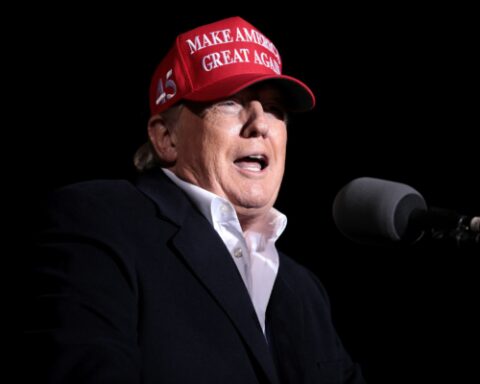
President Trump, for his part, has aligned himself with Levin both personally and on policy, backing the Fox News host and continuing to support military operations targeting the Iranian regime. The president also publicly defended Levin in a recent Truth Social post.
The clash highlights a growing divide not just between individuals, but within broader circles debating U.S. involvement abroad. As accusations fly and rhetoric intensifies, the episode underscores how questions of war, strategy, and accountability continue to reverberate far beyond closed-door meetings—raising concerns about both transparency and the heavy costs that can follow when disagreements over foreign policy turn into action.
[READ MORE: Trump Floats ‘Taking Cuba’ as Talks Continue, Raising Questions About Next Steps in Caribbean]