Tucker Carlson Claims DOJ May Target Him Over Iran Contacts as Debate Over War and Dissent Intensifies

3 mins read
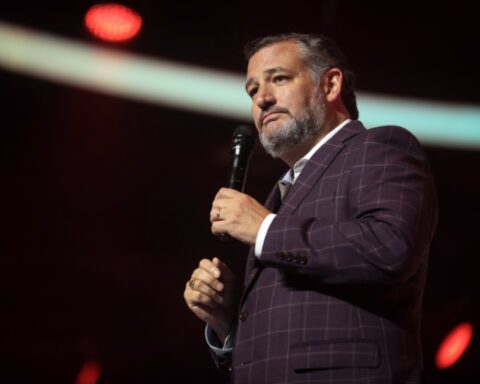
[Photo Credit: By Gage Skidmore from Surprise, AZ, United States of America - Tucker Carlson, CC BY-SA 2.0, https://commons.wikimedia.org/w/index.php?curid=134985261]

Political commentator Tucker Carlson said Saturday night that the Department of Justice may be preparing criminal charges against him for allegedly acting as an unregistered foreign agent, a move he suggested could stem from intelligence officials reviewing his communications prior to the United States’ war with Iran.

In a five-minute video posted to X, Carlson told viewers that he had learned of a potential criminal referral originating from the intelligence community, which he said could be sent to the Justice Department for prosecution.

“The CIA is preparing some kind of criminal referral against me, a crime report to the Department of Justice, on the basis of a supposed crime I committed,” Carlson said in the video. According to Carlson, the allegation centers on his communication with individuals in Iran before the conflict began.

Carlson said intelligence officials had reviewed his text messages and were framing the conversations as a violation of the Foreign Agents Registration Act, the 1938 law that requires individuals working on behalf of foreign governments in lobbying or political advocacy roles to register with the Justice Department.

The former Fox News host said he believes the potential case is unlikely to move forward, arguing the circumstances do not meet the law’s requirements.

“I’m not an agent of a foreign power,” Carlson said. “Unlike a lot of people commenting on U.S. politics and global affairs, I have only one loyalty and that’s the United States and have never acted against it.”

Carlson also emphasized that he has never accepted payment from any foreign government, which he said further undermines the claim.

“Don’t need it, don’t want it,” he added.

He also argued that, as an American citizen, he has the legal right to speak with people in other countries. For that reason, Carlson said he believes the potential legal theory behind the allegation is weak.

“Legally, I think the case is ludicrous, and I doubt it’ll even become a case,” he said.

Still, Carlson said he felt compelled to raise the issue publicly because of what he believes is a broader pattern during times of war.

[READ MORE: Trump Clashes With Media as Questions Grow Over Length and Cost of Iran War]
According to Carlson, governments historically become less tolerant of dissent when military conflicts escalate. He argued that this dynamic can appear even in the United States when public debate surrounding a war intensifies.

“[There are] some people who are mad at me for my views about Israel and they have some latitude,” Carlson said. He added that criminal referrals can sometimes be used to justify surveillance warrants, which he claimed could open the door to monitoring critics.

Carlson has sharply criticized the recent U.S. and Israeli strikes that killed Iranian Supreme Leader Ali Khamenei, describing the attacks as “absolutely disgusting and evil.” He has also argued that Operation Epic Fury was being carried out primarily on Israel’s behalf.

Those comments have placed him at odds with President Donald Trump, who publicly distanced himself from Carlson earlier this month.

“Tucker has lost his way,” Trump told ABC’s Jonathan Karl on March 5. “I knew that a long time ago, and he’s not MAGA. MAGA is saving our country. MAGA is making our country great again. MAGA is America first, and Tucker is none of those things.”

Trump has also rejected claims that the United States entered the conflict because of pressure from Israel. In a separate interview with ABC’s Rachel Scott, the president said, “If anything, I might’ve forced Israel’s hand.”

Reporting from The New York Times indicated that Carlson met with Trump three times in the month leading up to the conflict. According to the report, Carlson was one of the few figures within the president’s orbit urging him not to launch an attack on Iran. Trump ultimately chose a different course.

Carlson said he believes another possible motivation for the reported referral is reputational pressure.

According to him, intelligence agencies sometimes allow such information to surface publicly in order to intimidate critics.

“The intelligence community loves to leak those stories to humiliate and terrify their enemies,” Carlson said.

Whether the matter ultimately results in charges remains unclear. For now, Carlson framed the situation as part of a larger debate unfolding during wartime—one that raises questions not only about national security, but also about how much dissent the country is willing to tolerate while the conflict continues.

Leave a Reply

Your email address will not be published.

Latest from Blog