
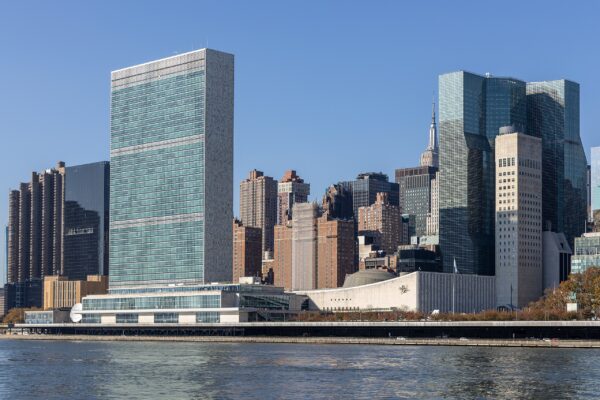
The United Nations is now reportedly facing what its own leadership describes as an “imminent financial collapse” following President Donald Trump’s decision to sharply reduce U.S. funding, according to a warning issued by Secretary-General António Guterres.
In a letter sent last week to all 193 U.N. member states, Guterres cautioned that the organization could run out of money as soon as July if the funding crisis is not resolved. “I cannot overstate the urgency of the situation we now face,” Guterres wrote, according to reporting by the BBC. “We cannot execute budgets with uncollected funds, nor return funds we never received.”
The financial turmoil follows Trump’s decision last month to pull the United States out of several U.N.-affiliated bodies, including UNESCO, the World Health Organization, and the UN Human Rights Council. The administration cited waste, mismanagement, and a lack of meaningful financial participation by other nations as reasons for the withdrawals.
The Trump administration has been vocal in its criticism of the U.N.’s direction and priorities. U.S. Ambassador to the U.N. Mike Waltz said the U.S. was refocusing its involvement on efforts aligned with an America First agenda while defunding what he described as ineffective or compromised institutions.
“We walked away from WHO… UNRWA… and the so-called human rights councils that cater to countries like North Korea and Venezuela and Iran,” Waltz told The Daily Wire in December. “It’s really about focusing our effort on the parts that align with an America First agenda and defunding and walking away from the rest of it — the nonsense.”
The United States, once the U.N.’s largest single contributor, did not pay its regular budget contribution in 2025 and covered only 30 percent of the expected funding for U.N. peacekeeping missions. While Washington pledged $2 billion to U.N. humanitarian programs in December, that amount represents a sharp drop from the $17 billion the U.S. spent on such efforts in 2022, according to the BBC.
Before the funding cuts, American taxpayers were responsible for roughly 22 percent of the U.N.’s regular budget — more than the next three highest contributing countries combined. Waltz argued that the organization needs to abandon what he called ideological distractions and return to its core mission.
“[The U.N.] needs to get back to basics… stop with the focus on climate, stop with the focus on gender and all of these other social issues… and let’s get back to peace,” Waltz said.
As Trump steps away from the U.N., his administration has turned attention to a newly established Board of Peace, designed to oversee a technocratic transitional government for Gaza and pursue other geopolitical goals. The board carries a $1 billion permanent membership fee and has invited more than 60 countries, leading some to view it as a potential rival to the United Nations.
The U.N.’s financial problems are not limited to U.S. cuts. Other major donors, including the United Kingdom and Germany, have also announced significant reductions to their foreign aid budgets, further straining the organization.
Guterres described the current crisis as “categorically different” from past funding shortfalls, noting that only 77 percent of assessed contributions were paid in 2025, leaving billions of dollars in unpaid dues. He warned that unless member states meet their financial obligations, the U.N. may be forced to overhaul its financial rules to avoid collapse.
“The integrity of the entire system,” Guterres concluded, “depends on all nations honoring their assessed contributions.”