
Just one day after President Donald Trump publicly encouraged U.S. oil executives to rebuild their businesses in Venezuela, the State Department issued a stark warning Saturday urging Americans to leave the country immediately, underscoring the volatile and dangerous conditions on the ground.
The evacuation advisory came exactly one week after U.S. troops ousted Venezuelan leader Nicolás Maduro and flew him to New York to face narco-trafficking charges. While the Trump administration has touted progress toward stabilizing the country, federal officials made clear that Venezuela remains an extremely high-risk environment for U.S. citizens.
In a statement, the U.S. Embassy in Venezuela warned that the country is subject to the highest possible travel advisory. “Venezuela has the highest Travel Advisory level – Level 4: Do Not Travel – due to severe risks to Americans,” the embassy said, citing threats including wrongful detention, torture in detention, terrorism, kidnapping, arbitrary enforcement of local laws, violent crime, civil unrest, and a failing health care system.
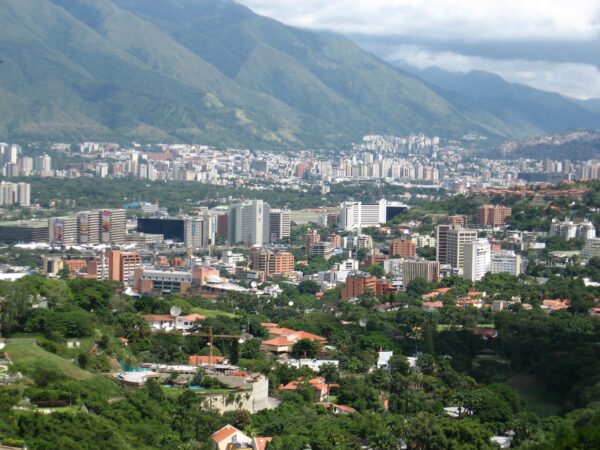
Reports indicate that the danger has intensified since Maduro’s removal. Venezuela is currently under the control of interim authorities led by Delcy Rodríguez, who had served as Maduro’s second-in-command. According to reporting earlier this week, armed militias loyal to the regime were deployed across Caracas and other areas to search for Americans and suspected supporters of the U.S. operation.
Residents described checkpoints where patrols stopped vehicles, demanded access to phones, and searched messages and social media accounts. One resident from the Catia neighborhood in western Caracas said anyone suspected of backing the U.S. raid risked immediate arrest. “There’s fear,” the resident said, describing armed civilians roaming the streets and an atmosphere of intimidation.
Rodríguez’s government also reportedly issued an emergency decree banning public celebrations of Maduro’s capture and ordering police to detain anyone involved in promoting or supporting what it described as the U.S. armed attack. The actions were widely viewed as an attempt to reassert control and crush dissent following the dramatic removal of the longtime socialist leader.
The evacuation warning came despite President Donald Trump announcing Friday that he had canceled a planned second “wave of attacks” against Venezuela. Trump said the decision followed what he called a “smart gesture” by Rodríguez’s government to release political prisoners.
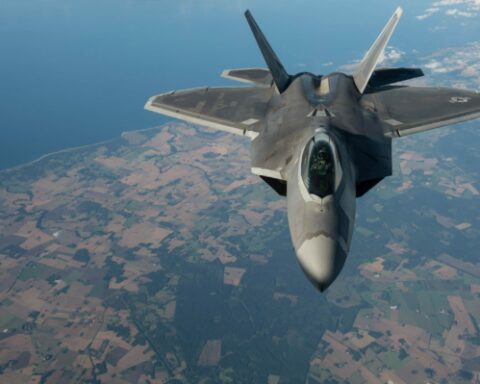
In a post on social media, Trump praised the move as a sign of cooperation and said the United States and Venezuela were working together, particularly on rebuilding oil and gas infrastructure. He added that because of this cooperation, additional attacks would not be necessary, though U.S. military assets would remain in place for security purposes. Trump also said that at least $100 billion would be invested by major oil companies and noted he had met with energy executives at the White House.
The president left Washington for Mar-a-Lago later Friday and had not publicly commented on the State Department’s evacuation order as of Saturday.
The juxtaposition of Trump’s optimism about economic rebuilding with the urgent warning for Americans to flee highlights the uncertainty surrounding Venezuela’s future. While the administration signals confidence in its broader strategy, U.S. officials are making clear that, for now, the country remains far too dangerous for American citizens to stay.