
President Donald Trump doubled down Sunday on his declaration that the United States will take charge in Venezuela following the capture and extradition of Venezuelan strongman Nicolás Maduro, brushing aside attempts to soften or reinterpret his remarks and making clear that Washington intends to oversee the country until conditions improve.
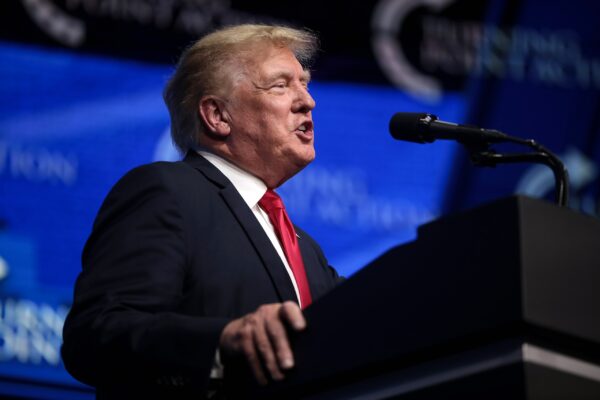
Speaking with reporters aboard Air Force One, Trump responded after Secretary of State Marco Rubio sought to clarify the president’s earlier statement that the U.S. would “run” Venezuela. Trump made clear there was no misunderstanding.
“We’re dealing with the people. We’re dealing with the people that just got supported,” Trump said. “And don’t ask me who’s in charge, because I’ll give you an answer, and it’ll be very controversial. We’re in charge.”
The president said elections would eventually take place in Venezuela, but only when the timing is right and stability is restored. “We’re going to run it, fix it,” Trump said. “It’s a broken country. There’s no money. There’s inflation, like we would have had if I didn’t win this election — we would have been Venezuela on steroids.”
When pressed on whether this marked a return to American nation-building, Trump rejected the premise, framing U.S. involvement as practical and mutually beneficial. He argued that helping rebuild Venezuela’s economy would serve both regional stability and American interests.
“We’re in the business of having countries around us that are viable, successful and where the oil is allowed to freely come out,” Trump said. He added that increased energy production would help bring prices down, which he said is good for the United States. Trump referred to the Western Hemisphere as America’s strategic neighborhood, jokingly dubbing his approach the “Donroe Doctrine,” a Trump-style riff on the Monroe Doctrine.
Trump said the decisive action against Maduro was driven largely by the flow of drugs into the United States. He pointed to recent military operations targeting drug trafficking networks operating by sea. According to the president, the War Department has conducted strikes on more than 30 vessels suspected of transporting narcotics, many linked to Venezuela.
Trump said the results have been dramatic, claiming that drugs entering the United States by sea are down 97%. He credited the aggressive campaign with cutting off a major pipeline used by traffickers and said it was long overdue.
During the exchange, Trump also turned his attention to Mexico, calling on the country to take stronger action against drug cartels operating within its borders. “Mexico has to get their act together,” he said, arguing that traffickers are exploiting Mexican territory to move drugs north.
“We’d love Mexico to do it. They’re capable of doing it,” Trump said. “But unfortunately, the cartels are very strong in Mexico.”
Trump was also asked about Greenland and whether he had plans to pursue control there. While he said his immediate focus would remain on Ukraine and Venezuela in the coming months, he emphasized that Greenland remains strategically vital.
“We need Greenland from a national security situation,” Trump said, citing the presence of Russian and Chinese ships in the region. He added that Denmark is not capable of addressing those threats on its own.
Taken together, Trump’s remarks underscored a broader theme: a muscular U.S. role in its sphere of influence, driven by national security, energy independence, and the fight against international drug trafficking. For Trump, Venezuela represents both a warning of what unchecked socialism can do and an opportunity to reassert American leadership close to home.